
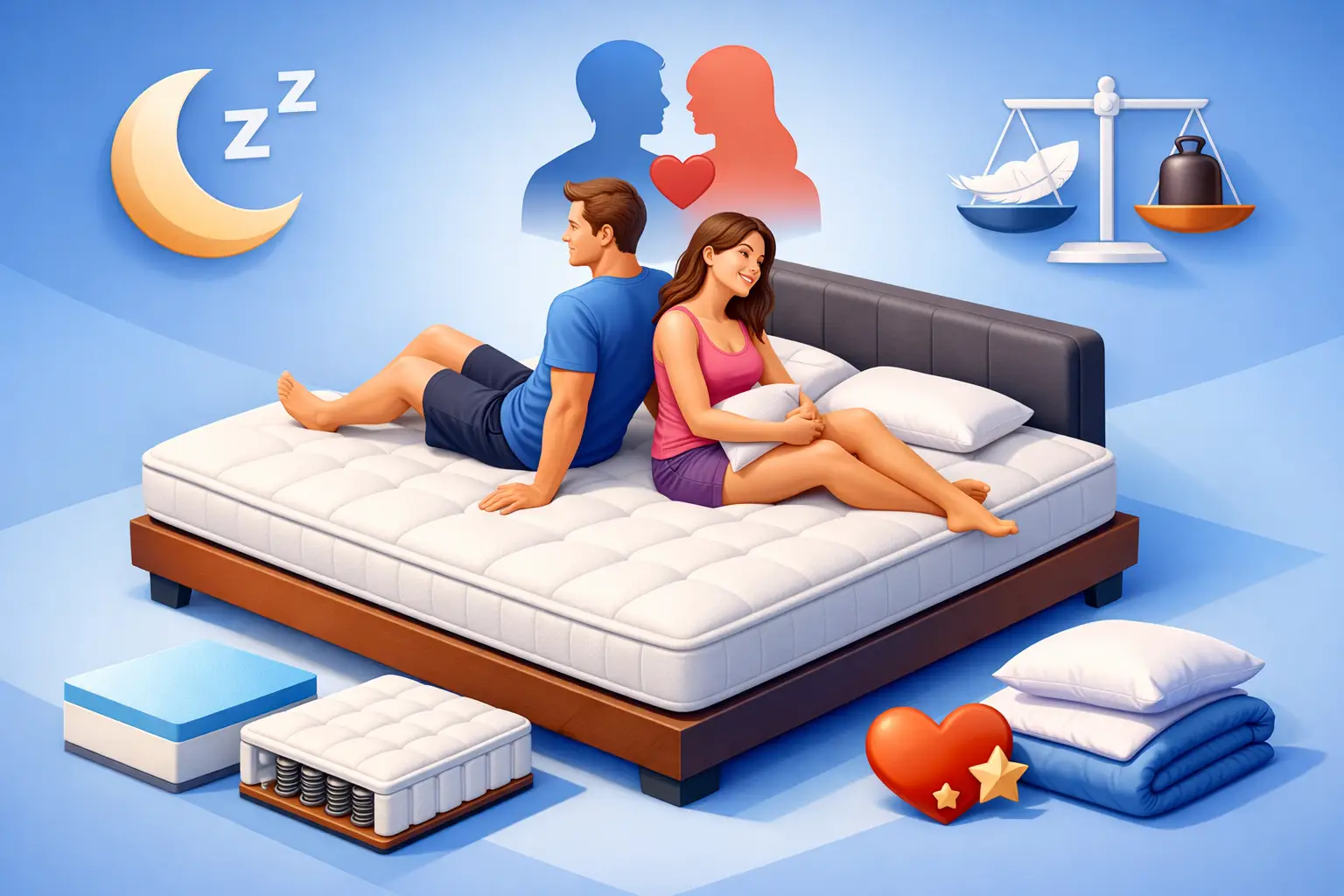
If one of you sleeps hot, the other tosses and turns, and both of you wake up feeling the bed all night long, the best mattress for couples is not just about comfort. It is about reducing the small sleep problems that add up fast when two people share one surface every night.
A mattress that works for one sleeper can fail quickly for two. More weight, different sleep positions, and different comfort preferences change the equation. Add snoring, midnight bathroom trips, or a partner who claims the middle of the bed, and the wrong mattress starts feeling expensive no matter what you paid for it.
What makes the best mattress for couples?
For couples, the right mattress usually comes down to four things: motion isolation, edge support, temperature control, and a firmness level that works for two different bodies. Price matters too, but value matters more. A lower price is only a good deal if the mattress still holds up and helps both people sleep better.
Motion isolation is often the first issue couples notice. If one person changes positions, gets up early, or comes to bed later, the other person should not feel every movement. Memory foam usually performs well here because it absorbs motion instead of bouncing it across the bed. Hybrid mattresses can also work well, especially when they use individually wrapped coils instead of connected springs.
Edge support matters more than many shoppers expect. Two people use more of the mattress surface than one person does, and weak edges make the bed feel smaller. If you sit on the side to get dressed or sleep close to the perimeter, strong edge support keeps the mattress stable and usable across the full width.
Cooling can be the difference between sleeping through the night and constantly kicking off the covers. Couples generate more body heat, so mattresses that trap warmth can become uncomfortable fast. Foam-heavy beds can sleep warmer unless they are designed with breathable materials, airflow channels, or coil systems that allow heat to escape.
Firmness is where trade-offs usually show up. A mattress that feels perfect to a back sleeper may feel too firm to a side sleeper. A plush feel may relieve pressure for one person and create back pain for the other. For many couples, a medium or medium-firm mattress is the safest place to start because it balances support and pressure relief without leaning too far in either direction.
Best mattress for couples by sleep style
There is no single mattress that wins for every pair. The best choice depends on how you both sleep.
If you both move around a lot
Look for strong motion isolation first. All-foam mattresses are usually the most forgiving if one or both partners toss and turn. A hybrid can still work, but it should have wrapped coils and comfort layers thick enough to absorb movement before it reaches the other side.
This is one case where extra bounce is not always a benefit. Responsive surfaces can make the bed easier to move on, but too much bounce can turn one restless sleeper into two tired people by morning.
If one or both of you sleep hot
Cooling features deserve real attention, not just marketing claims. Hybrids often have an advantage because coil systems allow more airflow than solid foam cores. Breathable covers, gel-infused foams, and moisture-managing bedding can also help, though they will not fully fix a mattress that naturally retains heat.
If cooling is a constant issue, avoid choosing a mattress based on softness alone. Plush foam can feel great in the showroom or on day one, but deep sink can trap more heat around the body.
If you have different body sizes
Weight differences can change how the same mattress feels. A lighter sleeper may experience a mattress as firm, while a heavier sleeper may feel it as softer and less supportive. Medium-firm hybrids are often a practical middle ground because they combine pressure relief on top with stronger support underneath.
This is also where durability matters. Two sleepers, especially with different builds, put more demand on the mattress over time. Denser foams and better coil systems tend to hold their shape longer and reduce the chance of body impressions forming too quickly.
If one of you is a side sleeper and the other is a back or stomach sleeper
This is one of the most common couple combinations. Side sleepers usually need enough cushioning at the shoulders and hips, while back and stomach sleepers typically need flatter support to keep the spine aligned. A true medium feel is often the best compromise.
If one partner strongly prefers plush and the other prefers firm, the solution may not be chasing a perfect average. It may be choosing a mattress with balanced support and then adjusting the feel slightly through pillows, protectors, or bedding layers instead of replacing the whole bed with something too extreme.
Foam, hybrid, or innerspring?
For most couples, the choice comes down to foam versus hybrid. Traditional innerspring mattresses can still be budget-friendly, but they often transfer more motion and may feel less refined for two sleepers.
Foam mattresses are usually the strongest option for motion isolation. They can be a smart buy for couples who are easily disturbed or have different schedules. The trade-off is that some foam beds sleep warmer and may feel less supportive around the edges, depending on construction.
Hybrid mattresses tend to offer the best all-around balance for couples. They usually provide better airflow, stronger edge support, and a mix of contouring and responsiveness. They also tend to feel more stable for couples who share the bed with kids or pets for part of the night.
If budget is tight, a well-made foam mattress can still be the better value. If you want more bounce, stronger perimeter support, and cooler sleep, a hybrid often earns the extra cost.
Size matters more for couples than most people think
A mattress can have the right feel and still be the wrong fit if it is too small. Full size works for some couples in a pinch, but it rarely feels spacious enough for long-term comfort. Queen is the most common starting point, and for many bedrooms it is the practical balance between sleeping space and room layout.
King gives each person more personal space and can reduce motion disturbance simply because there is more distance between sleepers. If one or both of you spread out, sleep with pets, or have very different schedules, sizing up can solve problems that firmness alone cannot.
Couples shopping for smaller rooms, guest spaces, or RV setups have to balance comfort with dimensions more carefully. In those cases, getting the best possible support and motion control in the size you can actually use is more important than forcing a bigger mattress into the space.
How to shop without overpaying
The best mattress for couples is not automatically the most expensive one. What matters is whether the materials, support, and comfort match the way both of you sleep. Paying more for features you do not need is not smart shopping. Paying too little for a mattress that breaks down early is not a deal either.
Start with the basics you cannot compromise on. If motion transfer is ruining sleep, make that the priority. If heat is the problem, focus on breathable construction. If you are both waking up sore, support and firmness should lead the decision.
Then look at the full purchase value. Free shipping, price guarantees, and bundle savings on protectors, pillows, or sheets can make a real difference when you are replacing more than just the mattress. For practical shoppers, that total-value view often matters more than the sticker price alone. That is one reason retailers like 4 The Abode appeal to buyers who want affordable premium sleep products without the usual showroom markup.
A few mistakes couples make
One common mistake is shopping based on one person’s comfort alone. If one partner loves the mattress and the other tolerates it, that usually catches up with you. Another mistake is assuming softer means better for couples. Soft can feel cozy at first, but too much sink can make movement harder, trap heat, and reduce support.
Couples also underestimate how much old foundations, worn frames, or poor bedding affect mattress performance. Even a good mattress can feel worse if the support system underneath it is failing. And if you are investing in better sleep, a quality protector is not an extra. It helps preserve the mattress and protects the purchase.
The right shared mattress should make the bedroom feel simpler, not more negotiable. When both people can lie down, stay comfortable, and sleep through each other’s movements, that is usually the clearest sign you bought well. Choose for how you actually sleep now, not for a label, and you will get more value out of every night on the bed.

Leave a Reply