
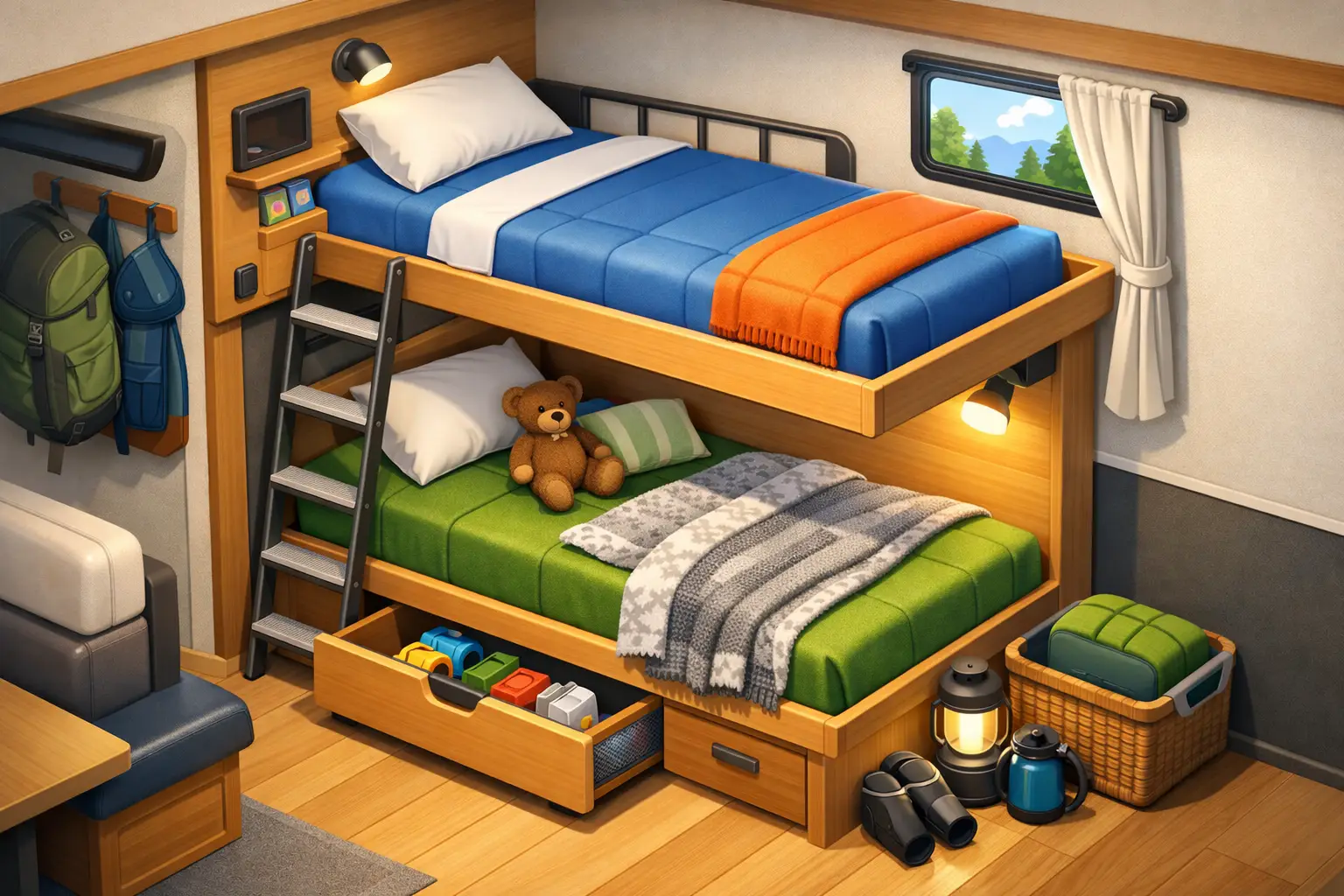
The fastest way to make RV bunks feel cramped, messy, and hard to sleep in is to treat them like regular twin beds. If you are figuring out how to outfit RV bunk beds, the best results come from building around the space you actually have – tight corners, short mattress sizes, limited headroom, and kids or guests who need comfort without a lot of fuss.
RV bunk beds do not need much to work well, but every piece has to earn its place. A mattress that fits correctly, bedding that stays put, and a few smart add-ons will do more for comfort than overloading the bunks with extra gear. The goal is simple: better sleep, less clutter, and a setup that holds up to travel.
Start with the mattress, not the accessories
If the mattress is thin, worn out, or the wrong size, everything else feels like a patch. Many RV bunks are not standard twin dimensions, and some have rounded corners, shorter lengths, or tighter width tolerances. Before buying anything, measure length, width, and height clearance. If the top bunk sits close to the ceiling, even an extra inch of mattress height can make the space feel unusable.
This is where a lot of RV owners overspend in the wrong order. They buy cute bedding first, then realize the mattress is the real problem. A properly sized RV bunk mattress usually gives you the biggest improvement in comfort and fit. It also makes it easier to choose sheets, protectors, and blankets that do not bunch up or slide off during the night.
For kids, a medium feel usually works well because it balances comfort and support. For adult guests, it depends on body weight and sleep position, but most people still do better with something more substantial than the factory mattress that came with the RV. Thin stock mattresses save manufacturers space and cost. They rarely save your sleep.
How to outfit RV bunk beds for real travel
The best bunk setup is not the one that looks full. It is the one that stays functional while the RV is moving, cleans up quickly, and does not create daily frustration. That means choosing essentials that are easy to remove, wash, and store.
Start with a mattress protector. In an RV, bunks get heavy use from kids, guests, pets, snacks, and the occasional wet swimsuit or spilled drink. A protector helps extend mattress life and cuts down on deep cleaning. It is one of the easiest upgrades because it protects your investment without taking up meaningful space.
Then add fitted sheets that are made to stay on. Standard bedding can work if the dimensions are close enough, but RV mattresses often need a tighter fit. Loose sheets are more than annoying in a bunk. They bunch, pull loose at the corners, and make it harder to keep the space tidy. If you can get sheets designed for RV sizes or for snug mattress fits, you will notice the difference right away.
Blankets should be light enough to manage easily in a small space. Bulky comforters sound cozy until they start falling off the edge or taking over the whole bunk. In most cases, a lighter blanket layered with a sheet works better than one oversized bed covering. It is easier to wash, easier to fold, and easier for kids to handle on their own.
Keep bedding low-profile and easy to secure
Bunk beds in an RV need bedding that behaves. The tighter the space, the less room you have for decorative pillows, oversized quilts, and extra layers. A cleaner setup usually works better than a fuller one.
Low-profile pillows are often the better choice, especially on upper bunks with limited clearance. A tall, overstuffed pillow can push a sleeper too close to the guard rail or wall, and it can make the bunk feel smaller than it already is. A pillow protector also makes sense here because bunks tend to collect dust faster and see less consistent airflow than a bedroom at home.
If the bunk is used often, consider assigning each sleeper a simple bedding set that stays with that bed. This avoids the constant shuffle of linens from one sleeping area to another. It also makes cleanup faster when everyone knows exactly what belongs where.
Safety matters more than style
A good-looking bunk setup is fine. A safe bunk setup is non-negotiable. If children are using the bunks, check the guard rail height after you add the mattress. A thicker mattress can reduce the protective height of the rail, which changes the safety of the bunk even if the bed frame itself has not changed.
Ladders and access points should stay clear. This is another reason not to overstuff the bunk with pillows and blankets. If a child climbs in and out at night, anything hanging over the edge becomes a trip hazard. Battery-powered clip lights can help, but place them where they will not get knocked loose during travel.
For younger kids, a bunk caddy or soft bedside organizer can be useful for books, a flashlight, or a water bottle. Just keep it minimal. The more items stored at sleeping level, the more likely the space starts to feel crowded or turns into a catch-all.
Add storage without making the bunks feel smaller
One of the biggest challenges in learning how to outfit RV bunk beds is resisting the urge to solve everything with storage bins. Storage helps, but only when it fits the routine. If every item requires stacking, unstacking, and rearranging, people stop using the system.
Soft-sided organizers usually work better than rigid bins around bunks. They flex with the space, weigh less, and are easier to tuck into narrow areas. Under-bunk storage can be useful if your layout allows it, but do not fill that space with things you need every day unless you want to lift mattresses constantly.
For families, the simplest approach is often the best: one compact container or fabric bin per bunk for personal items, plus a shared spot nearby for extra blankets or backup sheets. That keeps the sleep area from turning into general RV storage.
Choose materials that handle road life
RV bedding takes different abuse than house bedding. It deals with humidity shifts, packed storage, frequent washing, and sometimes long periods between uses. That is why easy-care materials usually beat anything delicate or high-maintenance.
Look for bedding that washes well and dries reasonably fast. This matters more than people expect, especially on longer trips or during busy travel seasons. If a fitted sheet takes forever to dry or wrinkles badly after every wash, it becomes a chore. Practical comfort wins here.
Durability also matters with protectors and pillows. In smaller sleeping spaces, everything gets touched more often and compressed more tightly. A product that performs well in a guest room might wear out faster in an RV if it was not built for repeated use.
Make the bunks comfortable for kids and usable for adults
Some RV bunks are kid zones most of the time and guest beds occasionally. That changes what you should buy. If the bunks are primarily for children, you can focus on washable, lightweight bedding and a mattress built for lighter bodies. If adults will sleep there regularly, mattress quality becomes much more important.
There is always a trade-off between thickness and clearance. A taller mattress may feel better for an adult, but it can make the upper bunk too tight or reduce rail safety. In some RVs, a well-made lower-profile mattress is the smarter buy because it preserves space while still improving support.
This is where buying by specs instead of guesswork pays off. The cheapest option is not a value if it needs replacing quickly, and the plushest option is not practical if it ruins the fit of the bunk. A sleep setup that matches the dimensions and actual users is usually the strongest overall value.
Finish with a few details that make daily use easier
Once the mattress and bedding are handled, small finishing choices can make the bunks easier to live with. A simple protector on both the mattress and pillow helps keep everything cleaner. A fitted sheet with a secure hold cuts down on daily straightening. A compact blanket folds fast and stores easily when the bunk doubles as daytime space.
If you are shopping for multiple items at once, this is one area where bundling makes sense. Replacing the mattress but skipping protection and proper sheets often leads to another order later. Getting the core pieces together saves time and gives you a setup that works from the first trip.
At 4 The Abode, that practical approach matters because RV sleep products should solve the whole problem, not just part of it. Comfort, fit, and protection all work better when they are chosen together.
A well-outfitted RV bunk does not need to look fancy. It just needs to fit right, stay clean, and make it easier for someone to get real rest after a long day on the road.

Leave a Reply