
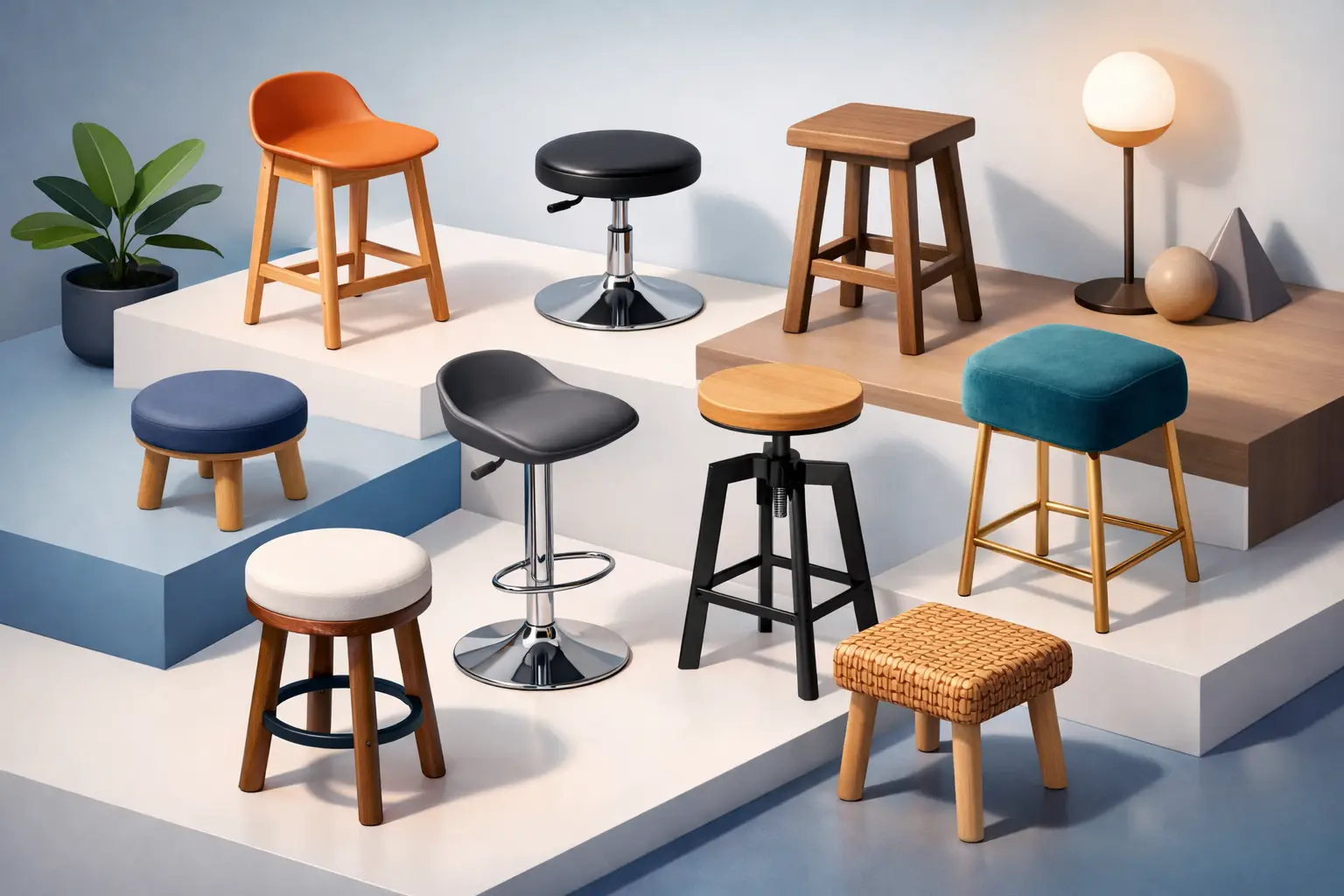
A stool that is too tall turns a counter into an awkward reach. One that is too short leaves wasted space and poor posture. Before you choose a style or chase a sale, get the measurements right. The stools at https://4-the-abode.com/stools/ are easiest to shop when you know where they will go, who will use them, and how often they need to perform.
For practical households, stools are not just decorative extras. They create seating at a kitchen island, add a landing spot in a bedroom, fit into a compact RV, or provide a convenient place to sit while getting ready. The right choice should be comfortable enough to use, sturdy enough to last, and priced sensibly enough to fit the rest of your home refresh.
Start With Stool Height, Not Style
Height is the first decision because it determines whether the stool will work at all. Measure from the floor to the underside of the counter, table, vanity, or work surface. Then allow roughly 9 to 13 inches between the top of the seat and the underside of that surface. That clearance gives most adults room to sit comfortably without bumping their knees.
Counter-height stools usually have a seat around 24 to 27 inches high and are made for counters near 36 inches tall. Bar-height stools generally have seats around 28 to 32 inches high and pair with bars or tall tables around 40 to 42 inches. Taller spectator-height options exist, but they require more careful measuring and are not the default choice for most homes.
Adjustable stools can help when measurements fall between standard sizes or when the same seating will be used by people of different heights. They are useful in apartments, multipurpose rooms, and RVs, but the mechanism is one more part to maintain. If you want the simplest long-term option, a fixed-height stool with the right dimensions is usually the better buy.
How Many Stools Fit Comfortably?
Crowding is one of the most common kitchen seating mistakes. A counter may technically hold four stools, but if guests have to turn sideways to get in and out, it does not function like four seats.
Plan for about 24 inches of counter width per stool for armless seating. If the stools have arms, broad seats, or a swivel base, allow 26 to 30 inches each. Leave enough space at both ends so the outer seats do not feel boxed in by walls or cabinetry.
There is also a floor-space issue. Measure how far the stool extends from the counter when it is occupied. In a narrow kitchen or an RV, a backless design that slides fully underneath can save valuable walking room. For a family breakfast area where people sit for longer, a backed stool may be worth the extra footprint.
Choose the Right Stool Design for Daily Use
A backless stool looks clean, takes up less visual space, and is easy to tuck away. It is a smart pick for quick meals, extra guests, vanities, and small rooms. The trade-off is support. Backless seating is less comfortable for long coffee chats, homework sessions, or meals that routinely last an hour.
Stools with backs provide more support and make a kitchen island feel more like a true dining area. They are often the practical choice for households that use counter seating every day. Look at the back height before buying. Low backs keep sightlines open, while higher backs offer greater support but can make a compact room feel more crowded.
Swivel stools make it easier to sit down, turn, and get up without dragging furniture across the floor. That is especially helpful in tight layouts. However, swivel hardware can add cost and may not be ideal for very young children who treat a seat like a ride. Fixed stools are straightforward, stable, and often easier to maintain.
Arms are another comfort upgrade with a space trade-off. They can make a stool feel more substantial, but they take up width and may prevent the stool from sliding neatly under the counter. In a limited space, measure the full outside width, not just the seat.
Materials That Match Your Household
Wood stools bring warmth and work well with traditional, farmhouse, transitional, and many modern bedroom styles. A solid wood frame can be a dependable long-term choice, especially when the joints are well built. Painted finishes may need occasional touch-ups in busy homes, while natural finishes can show scratches differently depending on the wood tone.
Metal stools are durable, easy to wipe down, and a natural fit for industrial, modern, and utility-focused spaces. They work well in kitchens and RVs where easy cleaning matters. Check for foot caps or floor protectors, particularly if you have hardwood, vinyl, or tile floors.
Upholstered stools add softness and can make an island, dressing area, or bedroom corner more comfortable. They are best for lower-mess spaces or households willing to clean spills promptly. Performance fabrics and easy-clean coverings are practical choices for families, but any upholstered seat requires more care than plain wood or metal.
Mixed-material stools, such as metal frames with wood seats or upholstered tops, can offer a balanced look. Focus less on trends and more on the surfaces your household actually uses. A beautiful light fabric may not be the best value beside a counter where kids eat snacks every afternoon.
Comfort Details That Matter More Than They Seem
Seat width affects how useful a stool feels. Narrow seats save space, but many adults will be more comfortable with a seat that provides adequate support through the hips and thighs. If the stool will be used for meals instead of occasional seating, do not treat seat size as a minor detail.
A footrest is equally important. When a person’s feet cannot reach the floor, a well-placed footrest reduces leg strain and makes the seat easier to use. Check that it is positioned naturally for the stool height. On metal frames, make sure the footrest is solidly attached and easy to clean.
Consider the edge of the seat as well. A sharply squared edge can press into the backs of the legs during longer sitting. A gently rounded or padded front edge is typically more comfortable. These small details separate a stool that looks good online from one that gets used every day.
Bedroom and RV Stool Ideas
Stools are useful beyond the kitchen. A compact upholstered stool at a vanity gives you a practical place to sit while getting ready without taking up the space of a full chair. A small stool near a dresser can hold tomorrow’s clothes or provide a spot to pull on socks and shoes. In a bedroom with limited square footage, choose a design that can also slide under a desk or vanity.
For RV owners, space and stability come first. Select a size that stores easily and does not block movement through the cabin. Backless or low-profile stools are often the most practical because they can tuck under a small dinette or counter. Look for sturdy construction and a finish that is easy to wipe after travel days, meals, and outdoor stops.
Get Better Value From Your Stool Purchase
Buying the least expensive stool is not always the lowest-cost decision. A weak frame, a wobbly base, or a hard-to-clean seat can lead to a replacement purchase sooner than expected. At the same time, you do not need luxury-store pricing for dependable seating. The best value comes from choosing the correct height, durable materials, and features you will actually use.
If you are refreshing more than one part of your home, coordinate your purchase around real needs. A new mattress, foundation, pillows, protectors, bedding, and a few functional furniture pieces can add up quickly. Shopping with visible pricing, free shipping where offered, and cart-based savings can make a larger home update more manageable.
Before checking out, review dimensions one final time: seat height, overall width, depth, and clearance around the counter or vanity. Then choose the stool that fits your everyday routine, not just the photo. A properly sized, well-built stool earns its place in your home by making daily life easier.

Leave a Reply