
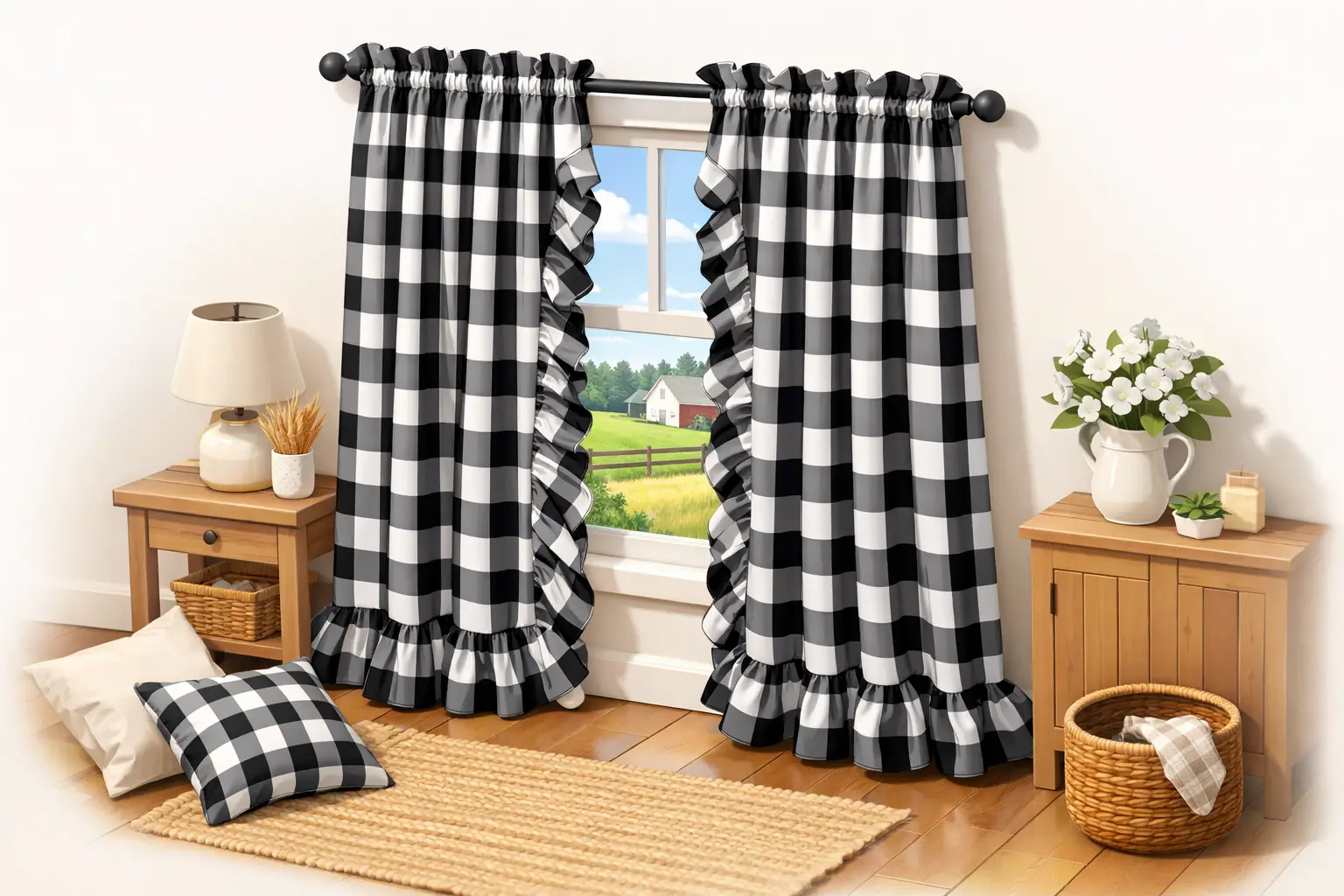
A window treatment can make a bedroom feel finished, or make a carefully chosen bed set look like it is still waiting for the rest of the room. Annie Buffalo Black Check Ruffled Prairie Long Panel Set of 2 gives shoppers a direct way to add classic black-and-cream pattern, softer edges, and more coverage to a window without replacing every piece of decor.
This is a practical choice for people who want farmhouse character with a cleaner, more tailored look than a busy floral curtain. The black buffalo check brings contrast to pale walls and neutral bedding, while the ruffled prairie detail keeps the pattern from feeling too sharp or overly modern. It works especially well in bedrooms, guest rooms, country-style homes, and spaces where you want the window to coordinate with quilts, shams, rugs, or simple wood furniture.
What Makes Annie Buffalo Black Check Ruffled Prairie Panels Stand Out
Buffalo check has staying power because it is easy to recognize and easy to pair. It has enough pattern to give a wall visual interest, but it does not require matching every accessory exactly. Black check is particularly useful when a room needs definition. Against white, cream, tan, gray, or weathered wood, it gives the space a grounded look that plain curtains often cannot provide.
The ruffled prairie styling changes the feel of a standard checked panel. Rather than looking flat or strictly casual, the added detail gives the window a more finished, layered appearance. That can be a strong fit for a bedroom where the bed is the focal point and the drapes need to hold their own without competing with the bedding.
The set includes two panels, which is the practical starting point for a standard window. A matched pair gives both sides of the window a balanced look and helps create a more complete frame around the view. Before ordering, measure your window and curtain rod carefully. The product name references 84 x 36 x 18 sizing, so confirm the listed dimensions against your needs and decide where you want the panels to fall before making a purchase.
Measure First for a Better Fit
Curtains that are too short can make ceilings feel lower. Panels that are too narrow may not provide the fullness shoppers expect when they are closed or pulled to the sides. A few minutes with a tape measure can prevent the most common window-treatment mistakes.
Start by measuring from the point where the panel will hang on the rod to the location where you want it to end. For a traditional look, the lower edge should finish near the floor. If furniture, a radiator, or a window seat sits below the window, measure for that clearance instead. An 84-inch length is often used for standard-height rooms, but rod placement matters as much as panel length. Hanging the rod higher than the window frame can make the room appear taller, provided the panel still reaches the intended stopping point.
Next, measure the rod width, not just the glass. For a fuller appearance, the combined width of the panels should generally cover more than the window itself. How much more depends on whether the panels are primarily decorative or expected to close across the window. A decorative, side-framing setup can use less fullness. A window that needs a more covered look usually benefits from additional width or extra panels.
The “set of 2” detail is helpful, but it does not automatically mean one set fits every window. Wide windows, double windows, and patio-adjacent spaces may need more than one set to avoid a stretched, skimpy look. That is a small extra cost that can make a major difference in the final result.
Where Black Buffalo Check Works Best
Black-and-cream buffalo check is flexible, but it is not invisible. It creates contrast, so it is best used with purpose. In a white or light-gray bedroom, these panels can become the visual anchor that ties together black picture frames, a dark metal bed, or a charcoal accent pillow. In a room with natural wood furniture, they add a country-inspired note without requiring a full rustic overhaul.
For a coordinated bedroom, repeat the black tone in two or three places rather than everywhere. A black lamp base, a framed mirror, and a few dark accents can be enough. Pairing check panels with solid bedding is often the safest choice because it lets the window treatment provide the pattern. If you already own patterned quilts or printed sheets, use neutral shams, a simple coverlet, or a solid-colored bed skirt to keep the room from becoming visually crowded.
These panels can also suit a guest room. Guest spaces often need to feel pulled together without a high-cost redesign. A coordinated curtain set, clean bedding, and a few practical furnishings can make the room feel intentional and ready to use. That is where a recognizable pattern earns its place: it gives the room personality fast.
There are exceptions. A small room with dark walls, dark flooring, and limited daylight may feel heavier with prominent black check. In that case, use the panels with light bedding and brighter wall decor, or reserve black accents for a smaller part of the room. Pattern scale also matters. If the room already has several large patterns, a more solid window treatment may be the better choice.
Build a Coordinated Bedroom Without Overspending
Refreshing a room does not have to mean buying a new bedroom suite. Start with the pieces that carry the most visual weight: bedding, window treatments, and a rug if the floor needs warmth. The Annie Buffalo Black Check Ruffled Prairie Long Panel Set of 2 can set the direction, then you can add supporting pieces as budget allows.
For a crisp farmhouse-style setup, use cream or ivory bedding, natural wood finishes, and black metal accents. For a softer look, bring in warm beige, muted tan, or faded sage through pillows and throws. If you prefer a more traditional country room, layer in ticking stripes, small florals, or quilted textures sparingly. The key is to vary the scale of the patterns. Large check looks better beside solids or smaller, quieter prints than beside another bold grid.
Practical shoppers should also think about how the room is used. A primary bedroom may need window treatments that coordinate with mattress protectors, sheets, and seasonal bedding changes. A guest room may benefit more from a durable, easy-to-maintain setup that looks good year-round. An RV bedroom has tighter dimensions and different hardware needs, so measure the window, rod placement, and clearance around bunks or cabinets before selecting standard long panels.
Check the Details Before You Order
A product photo shows the style, but the product specifications determine whether it will work in your room. Review the listed dimensions, hanging method, material details, care instructions, and what is included in the package. Confirm whether the stated width refers to an individual panel or the full pair. That distinction matters when you are trying to achieve adequate coverage.
Also consider the role the panels need to play. Decorative drapes can soften a room and frame a window beautifully, but they are not automatically a substitute for blackout curtains, insulated linings, or privacy shades. If room-darkening, temperature control, or complete privacy is a priority, plan a layered setup with appropriate blinds, shades, or liners behind the decorative panels.
Care needs deserve the same attention. Bedrooms and guest rooms are usually lower-maintenance spaces, but dust, pet hair, and seasonal cleaning still matter. Follow the product-specific care label rather than assuming every cotton-look or checked panel can be washed the same way. Proper care helps preserve the shape, color, and ruffled finish that make these panels worth choosing.
At 4 The Abode, practical home updates are easier to plan when you can pair a distinctive window treatment with dependable bedding and bedroom essentials in one shopping trip. Measure your space, match the panel style to the way you use the room, and choose enough width for the finished look you actually want.

Leave a Reply