
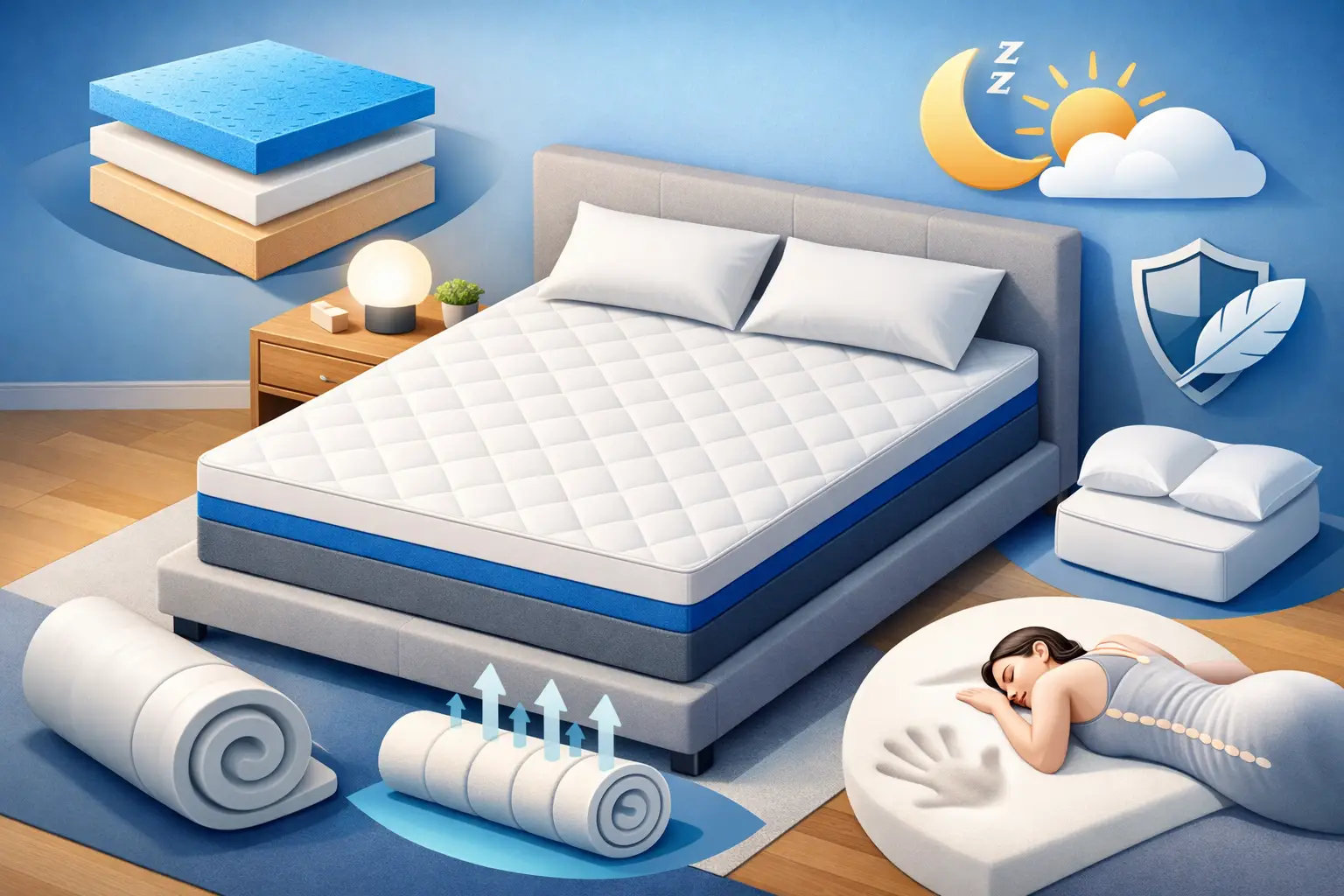
A mattress that has lost its support can make every morning feel harder than it should. The product page at https://4-the-abode.com/product/6-essentials-firm-memory-foam-mattress-2/ is worth a close look for shoppers who want a firmer sleep surface, memory foam comfort, and a price that makes sense for a real household budget.
A firm memory foam mattress is not built for everyone, but it can be a practical answer for people who are tired of deep sagging, excessive sink, or the unstable feel of an old innerspring bed. The goal is simple: a more supported sleep surface that helps you settle in without paying luxury-store prices for features you may not need.
What a Firm Memory Foam Mattress Is Designed to Do
Firmness is about how the mattress feels when you first lie down. A firm mattress generally creates a flatter, more stable surface than a plush or pillow-top model. Memory foam adds contouring, which means the material responds to body weight and helps spread pressure across the surface instead of concentrating it at the hips, shoulders, and lower back.
That combination can be especially appealing if your current mattress feels soft in the middle, if you wake up feeling like you have been sleeping in a dip, or if you simply prefer a bed that feels more supportive from edge to edge. Firm does not have to mean hard. The right memory foam mattress can feel supportive while still cushioning the parts of your body that carry the most pressure.
Mattress feel is personal, though. Body weight, sleeping position, room temperature, and the foundation under the bed can all change the experience. A mattress that feels comfortably firm to one sleeper may feel too stiff to another. That is why practical shoppers should consider how they actually sleep, not just what sounds good in a product name.
Who Should Consider the 6 Essentials Firm Memory Foam Mattress?
The 6 Essentials Firm Memory Foam Mattress can make sense for shoppers replacing a worn mattress without overcomplicating the purchase. It is a strong fit for people who value support, want the pressure-relieving qualities associated with foam, and prefer a firmer feel over a soft, sink-in bed.
Back sleepers often look for a firmer surface because it can help keep the midsection from dropping too far into the mattress. That can create a more level sleeping position. Stomach sleepers may also prefer a firmer mattress, particularly if they find that soft beds allow their hips to sink and leave their lower back feeling strained.
Combination sleepers may appreciate the stable feel as well. Memory foam can contour around the body, while a firm design can reduce the overly trapped sensation some sleepers experience on softer foam beds. Still, anyone who changes positions frequently should pay attention to the mattress details and their own preferences. Foam response can vary by construction.
Side sleepers are the group most likely to need a closer look before choosing firm. Many side sleepers need enough give around the shoulder and hip to avoid pressure buildup. A firmer mattress can still work for some people, especially those who prefer more support or have a larger body frame, but a plusher option may be more comfortable for others. If you sleep on your side most of the night, consider whether adding a mattress topper is part of your plan if you want a little more cushioning later.
Why Memory Foam Remains a Practical Choice
Memory foam has stayed popular because it solves real sleep problems without requiring an elaborate setup. It is known for contouring to the body, which can help relieve pressure at common contact points. It also usually limits motion transfer better than many traditional coil-only mattresses.
For couples, less motion transfer can be a meaningful benefit. When one person gets up early, changes position, or returns to bed late, the other person may feel less movement across the mattress. No mattress eliminates every disturbance, but foam can offer a quieter, more settled surface than an aging spring mattress.
Foam mattresses can also be a good choice for guest rooms, first apartments, kids moving into larger beds, and second homes. In those situations, buyers often need dependable comfort and solid support without spending as if they are furnishing a high-end hotel suite. A firm memory foam option keeps the purchase focused on what matters: a bed that feels supportive and holds up to everyday use.
Check the Details Before You Buy
A mattress is a major home purchase, even when you are shopping for value. Before placing an order, review the current product listing for the available sizes, mattress height, foam construction, care information, and any warranty or return terms that apply. Product specifications can matter as much as the overall firmness label.
Measure your bed frame and bedroom before selecting a size. A queen is often the practical choice for couples, while a full can work well in smaller rooms and a twin or twin XL may be better for a child, teen, guest room, or compact space. Also consider whether the mattress height will work with your existing sheets, headboard, and nightstands.
Your base matters, too. Use a properly supported foundation, platform bed, or compatible frame according to the mattress guidelines. An unsupported or damaged base can affect comfort and may shorten the useful life of any mattress. If you are replacing an older mattress and foundation at the same time, it is smart to evaluate both rather than assume the old base is still doing its job.
Give a new foam mattress time to adjust after setup. It may need time to expand and air out after shipping, depending on how it is packaged. A mild new-product smell can occur with foam products and typically fades with ventilation. Follow the care instructions provided with the mattress, and keep the room well aired during the first few days if needed.
Build a Better Bed Without Overspending
The mattress is the center of the sleep setup, but the right basics protect your purchase and make it easier to enjoy. A mattress protector helps guard against spills, moisture, and everyday accidents. It is an especially sensible add-on for households with children, pets, or a busy guest room.
A fitted sheet that stays in place can also make a noticeable difference. Deep-pocket sheets may be needed depending on the final mattress height. Pair the bed with pillows that match your sleeping position instead of buying the softest option on the shelf by default. Back sleepers often need moderate loft, side sleepers frequently need more height to fill the space between the shoulder and head, and stomach sleepers usually do better with a lower-profile pillow.
If you are furnishing a complete bedroom, buying the essentials together can save time and help avoid mismatched sizes. The practical order is straightforward: choose the mattress size first, confirm the frame or foundation, then select a protector, sheets, pillows, and bedding that fit the actual mattress dimensions.
Value Means Buying for the Way You Sleep
The best mattress is not automatically the most expensive one. It is the one that fits your preferred feel, sleeping position, space, and budget without asking you to pay for extras you do not value. A firm memory foam mattress is a clear, no-nonsense option for shoppers who want stable support and the familiar body-contouring feel of foam.
If your old bed is sagging, noisy, or no longer comfortable, replacing it can be one of the most useful upgrades you make at home. Review the current 6 Essentials mattress specifications, choose the size that fits your room, and protect it from day one. At 4 The Abode, straightforward sleep essentials and value-focused shopping make it easier to get the bedroom basics handled without stretching the budget.

Leave a Reply