
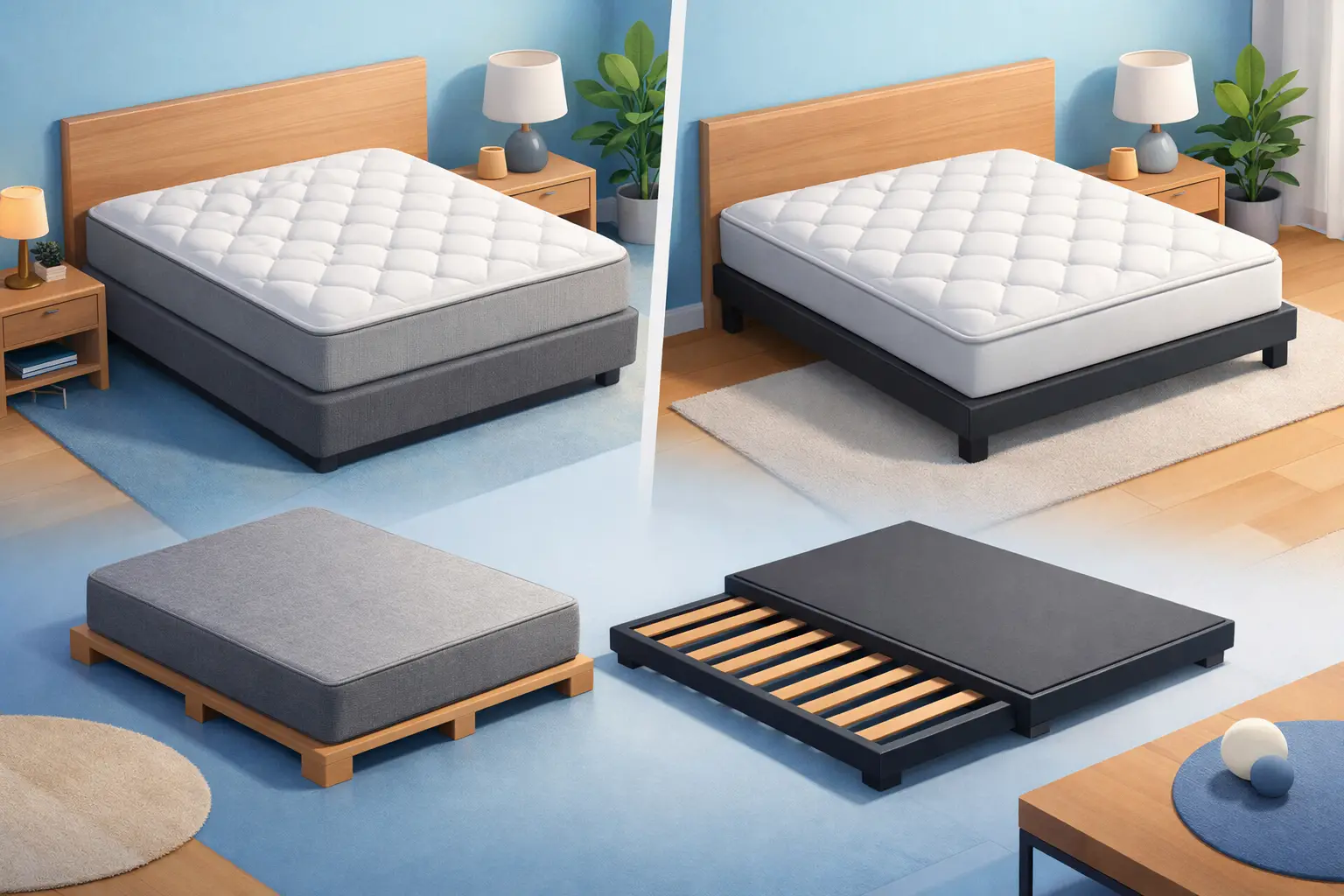
A bed that feels too tall can make a bedroom less comfortable before you even lie down. If you are asking, what is a low profile foundation, the simple answer is this: it is a supportive mattress base with a shorter height than a traditional box spring or standard foundation. It gives your mattress a stable, level surface while keeping the overall bed lower to the floor.
For many shoppers, that lower height is the whole point. Today’s mattresses are often thicker than older models, especially pillow-top, hybrid, and memory foam designs. Pairing one with a tall foundation can create a bed that is difficult to get into, awkward with a headboard, or simply too high for the room. A low profile foundation helps bring the setup back into a practical range without giving up the support your mattress needs.
What Is a Low Profile Foundation?
A low profile foundation is a rigid mattress support base, usually measuring about 4 to 6 inches high. By comparison, a standard foundation commonly measures 8 to 9 inches high. Both are designed to sit inside a compatible bed frame or on a platform and support the mattress evenly.
The foundation itself may have a wood, metal, or combination frame, often covered in fabric to give it a finished look. Unlike an old-fashioned coil box spring, most modern foundations do not add bounce. Their job is straightforward: hold the mattress steady, help prevent sagging caused by inadequate support, and create the height you want for your bed.
The word “low profile” describes the base’s height, not its strength. A well-built low profile foundation can offer the same dependable support as a taller version when it is correctly matched to the mattress, frame, and weight capacity.
Why Choose a Low Profile Bed Foundation?
A low profile foundation can solve a real fit problem without requiring a new mattress. It is especially useful when a mattress feels great but makes the bed sit higher than you prefer.
For example, a 14-inch mattress on a 9-inch foundation creates a much taller sleep surface than the same mattress on a 5-inch foundation. That difference can matter for shorter adults, children, older sleepers, and anyone who wants an easier step into bed. It can also make a room look more balanced when you have a lower headboard, smaller nightstands, or a bedroom where a tall bed overwhelms the space.
Low profile foundations are also a sensible choice for thicker mattresses. Many shoppers like the plush comfort of a taller mattress but do not want the finished bed height that comes with stacking it on a standard-size base. Choosing a lower foundation is an easy way to keep the comfort layer you want while maintaining a practical setup.
There is a style benefit, too. A lower bed can create a cleaner, less bulky look. That may suit a modern platform frame, a simple upholstered bed, or a bedroom where you want furnishings to feel proportional rather than oversized.
Low Profile Foundation vs. Box Spring
These terms are sometimes used interchangeably, but they are not always the same product.
A traditional box spring contains springs inside a framed base. It was originally designed to work with older innerspring mattresses, adding some flexibility and helping absorb movement. Many current mattresses, including foam and hybrid models, do not need that added spring action. In fact, some require a flat, firm support system instead.
A modern foundation is typically more solid and stable. It supports the mattress from below without changing how the mattress is intended to feel. If your mattress is designed for a firm base, a low profile foundation can be a better fit than a flexible, older-style box spring.
Always check the mattress manufacturer’s support requirements before buying. A foundation may be appropriate, but some mattresses work best on closely spaced slats, a platform bed, or an adjustable base. The right choice protects both comfort and warranty coverage.
How Much Height Does a Low Profile Foundation Save?
Most low profile options reduce bed height by roughly 3 to 5 inches compared with a standard foundation. That may not sound dramatic on paper, but it is noticeable every day when you sit down, stand up, change sheets, or make the bed.
To estimate your finished bed height, add the height of your bed frame, foundation, and mattress. For instance, a 7-inch frame, 5-inch low profile foundation, and 12-inch mattress create a sleep surface around 24 inches from the floor. Switch to a 9-inch foundation, and the total rises to about 28 inches.
There is no single best bed height. The practical test is whether you can sit on the edge with your feet comfortably on the floor and stand up without climbing or dropping down. Your mobility, mattress thickness, and personal preference all matter more than a trend.
What to Check Before You Buy
The lowest-priced base is only a value if it fits your mattress and frame correctly. Start with mattress size. A twin, full, queen, king, California king, and RV mattress each need the right dimensions. Even similarly named sizes can differ, particularly in RV sleep spaces, so measure before ordering.
Next, verify the support type. If you already own a bed frame, confirm it has center support where needed, particularly for larger mattress sizes. A foundation needs stable support underneath it. A center beam and legs can be essential for preventing bowing or uneven wear over time.
Consider the foundation’s assembled height, not just the label. Low profile usually means 4 to 6 inches, but product dimensions vary. Measure your current setup and decide how much lower you actually want the bed to sit. This prevents the common mistake of buying a new base that changes the height less than expected.
Finally, think about access. Some foundations arrive in a compact package and assemble at home, which can be easier to move through narrow hallways, staircases, apartments, or RV doors. Others come as a more traditional one-piece base. Neither is automatically better. Choose the option that works for your space and your comfort with assembly.
When a Low Profile Foundation May Not Be the Best Choice
A low profile foundation is not the right answer for every bedroom. If you need under-bed storage, lowering the setup may reduce useful clearance. If you have a very thin mattress, a standard-height foundation may provide a more comfortable sitting and standing height.
Some people also prefer a higher bed because it is easier on their knees or because they simply like the traditional look. In that case, a standard foundation or a taller frame may make more sense. The goal is not to make the bed as low as possible. It is to create a stable setup that feels easy to use.
For adjustable bases, a separate foundation is generally not used. The mattress sits directly on the adjustable base. Likewise, many platform beds already provide sufficient support, provided their slats meet the mattress maker’s spacing requirements.
Get the Right Support at the Right Height
A low profile foundation is a simple, cost-conscious way to control bed height while giving a compatible mattress the firm, even support it needs. It works particularly well with today’s thicker mattresses, lower headboards, and rooms where every inch of visual space matters.
Before replacing your base, measure your current bed height, review your mattress support requirements, and confirm your frame can support the full setup. At 4 The Abode, practical sleep essentials and straightforward value make it easier to build a bed that fits your room, your comfort, and your budget.

Leave a Reply