
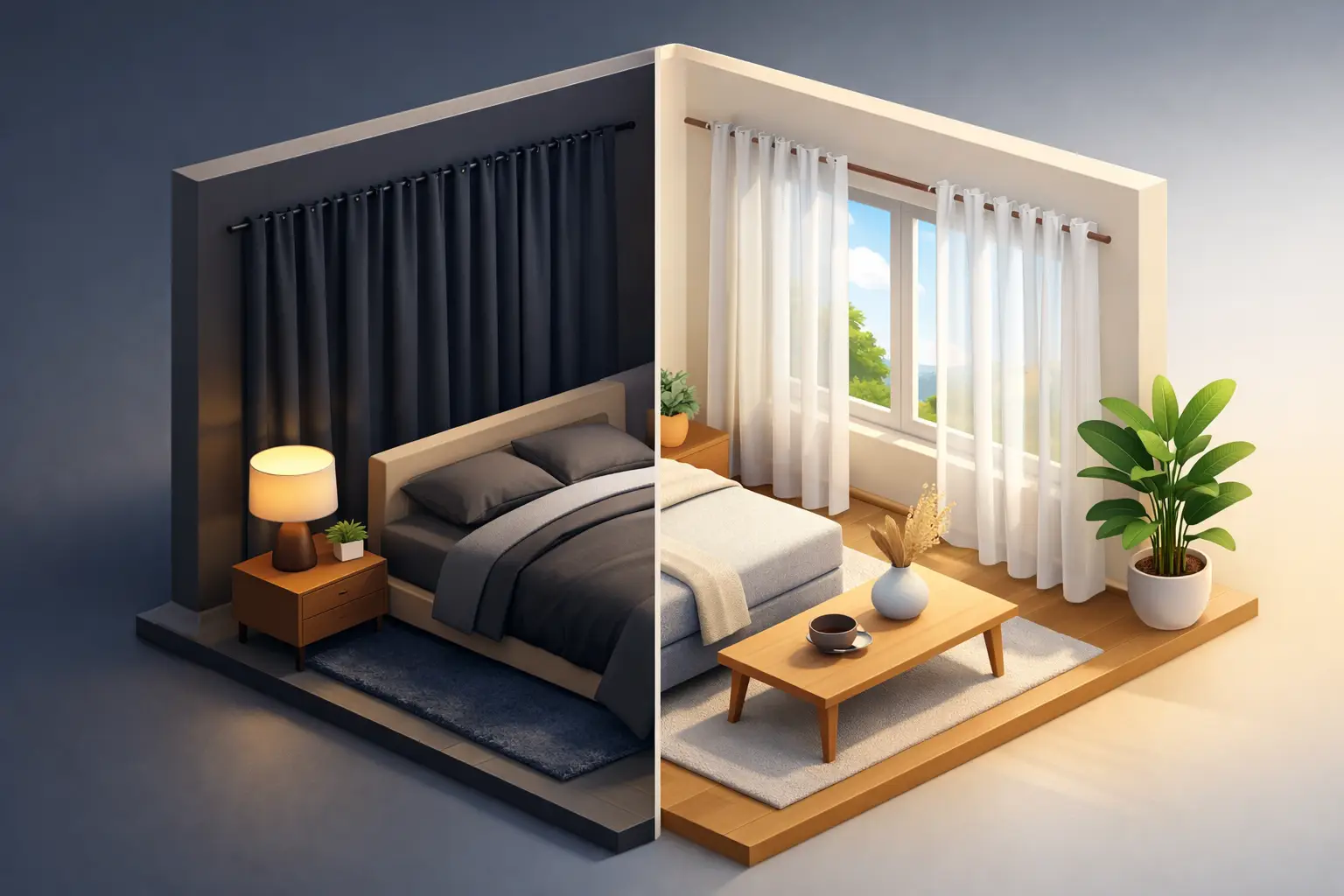
A bedroom can look finished and still fail at its most basic job: helping you rest. The blackout versus sheer curtains decision affects early-morning light, privacy after dark, room temperature, and how often you wake up before the alarm. The right choice is less about following a decorating rule and more about how you use the room.
For a primary bedroom, nursery, guest room, or RV sleeping space, light control usually matters more than people expect. For a living room that needs daylight without an exposed view, sheers may be the smarter and more affordable answer. Start with the function, then choose the fabric, color, and hardware that make it work.
Blackout Versus Sheer Curtains at a Glance
Blackout curtains use tightly woven, layered, or foam-backed fabric to block most outside light. Quality blackout panels can also add privacy, reduce glare, and create a more insulated feel at the window. They are built for rooms where sleep, movie viewing, shift-work schedules, or strong sun are real concerns.
Sheer curtains are lightweight, translucent panels that soften sunlight rather than stop it. They give a room an open, airy look while providing limited daytime privacy. At night, with interior lights on, sheer fabric does not prevent people outside from seeing into the room.
Neither option is automatically better. Blackout curtains deliver stronger performance; sheer curtains deliver a lighter look and preserve natural daylight. Many households get the best result by using both on a double curtain rod or layered track.
When Blackout Curtains Are Worth It
Blackout curtains are a practical buy when a window faces the rising or setting sun, a streetlight shines into the room, or family schedules make daytime sleep necessary. They are especially useful in bedrooms, nurseries, media rooms, and RVs where close parking, campground lighting, and compact windows can make privacy harder to manage.
The biggest benefit is more consistent darkness. That can make a real difference for people who work nights, children with early bedtimes, and anyone who is sensitive to morning light. They also help reduce screen glare, so a television or home office setup is easier to use during bright hours.
Privacy is another major advantage. A heavier panel keeps the room from being visible at night, even when lamps are on. If your bedroom faces a sidewalk, neighboring home, parking area, or shared outdoor space, blackout panels provide a more dependable barrier than light-filtering fabric.
They can also help with temperature comfort, though expectations should be realistic. Curtains are not a replacement for proper insulation, weatherstripping, or efficient windows. Still, a substantial fabric layer can reduce the direct heat that comes through sunny windows and make drafty areas feel less exposed in colder weather. This is useful in bedrooms that run hot, upper-floor rooms, and RVs with large windows.
The trade-off is visual weight. Dark or thick panels can make a small room feel more enclosed, particularly when they stay closed all day. They may also cost more than simple sheer panels, and some blackout linings require more careful cleaning. Check the care label before buying if you want machine-washable window treatments.
Blackout does not always mean total darkness
A panel labeled blackout can block the fabric area very effectively while light still enters around the curtain rod, sides, bottom, and center gap. If you want the darkest possible room, buy panels wider than the window and mount the rod several inches above and beyond the frame. Let the curtains overlap in the middle and extend close to the floor.
For the strongest coverage, look for wraparound rods or side-return hardware that brings the panel closer to the wall. Color matters, too. Darker blackout fabrics generally control light more effectively than pale fabrics with a similar construction, although the lining and weave are just as important.
When Sheer Curtains Make More Sense
Sheer curtains work well where natural light is a benefit, not a problem. A living room, breakfast area, sunroom, or home office can feel more comfortable with softened daylight instead of a fully covered window. Sheers reduce the harshness of direct sun while keeping the view and the sense of openness that bare windows provide.
They are often the right choice for smaller spaces because they add texture without taking over the room. White, ivory, and light neutral sheers suit many furniture styles, from traditional bedrooms to clean-lined contemporary spaces. They also tend to be an easy, budget-friendly way to refresh a room without replacing furniture or repainting.
Daytime privacy is their main functional benefit. During the day, outdoor light is brighter than indoor light, so sheers make it harder for passersby to see clearly inside. That privacy changes after sunset. Once the room is illuminated, sheers become largely decorative and offer little concealment.
This makes sheers a weaker choice for ground-floor bedrooms, bathrooms, or any window that faces close neighbors. They also will not block enough light for most people who need a dark sleeping environment. If that is your situation, use sheers as the front layer and pair them with blackout panels behind them.
Consider the view before choosing sheers
Sheers are most rewarding when there is something worth seeing outside: trees, an open yard, a garden, or a pleasant streetscape. If the view is a parking lot, another building, or a busy road, the extra daylight may not outweigh the loss of privacy. In that case, light-filtering or blackout curtains may offer a better daily experience.
How to Choose for Each Room
For bedrooms, choose blackout curtains when sleep quality and nighttime privacy come first. This is the safer choice for east-facing windows, children’s rooms, and rooms exposed to exterior lighting. A lighter-colored blackout panel can keep the room from feeling too dark when the curtains are open.
For living rooms, it depends on sun exposure and how the room is used. Sheers are a strong fit for a room that needs daylight and a softer finished look. Add blackout panels if afternoon glare heats the space, fades furnishings, or makes the television hard to see.
For guest rooms, a layered setup is often the most considerate option. Guests can use the sheers during the day and close blackout panels when they want privacy or extra sleep. It gives different sleepers more control without asking them to adjust to one fixed solution.
For RVs, blackout curtains are usually the more functional starting point. Campgrounds, parking areas, and close neighboring sites can make privacy and light control essential. Choose durable, easy-care panels and make sure the mounting method can handle movement on the road.
Measure Before You Buy
Good curtains need enough width to cover the window properly. Measure the curtain rod, not only the glass, and plan for combined panel width that is roughly 1.5 to 2 times the rod width for a full appearance. Narrow panels can leave gaps and look stretched when closed.
For length, decide whether you want curtains to float just above the floor, touch it, or puddle slightly. For practical bedrooms and high-traffic spaces, panels that hover about a half-inch above the floor are easy to clean and less likely to collect dust. Mounting the rod higher than the window frame can make ceilings appear taller and helps reduce light leakage above the panel.
Do not overlook the rod. A lightweight rod may sag under heavy blackout curtains, while a double rod is needed if you want sheer and blackout layers. Buying the right hardware the first time protects the look of the room and avoids a second round of purchases.
The Best Value May Be a Layered Setup
If you want daylight during the day and darkness at night, layering sheers with blackout curtains is often the best value. You do not have to choose between an inviting room and a sleep-ready one. Keep the sheer panels closed for filtered light and daytime privacy, then draw the blackout panels when you need rest, security, or screen visibility.
Choose neutral blackout panels if you want flexibility with future bedding, rugs, and furniture updates. Then use the sheers to add softness without committing to a bold pattern. This approach works especially well when furnishing a bedroom on a practical budget because it lets one window treatment handle several needs.
The best curtain is the one that solves the problem you actually have. If the room is too bright, too exposed, or too warm in direct sun, start with blackout panels. If it feels closed off and needs gentle daylight, start with sheers. When you need both, layering gives you reliable comfort without paying luxury-store prices – a smart way to finish a room that works as hard as it looks.

Leave a Reply