
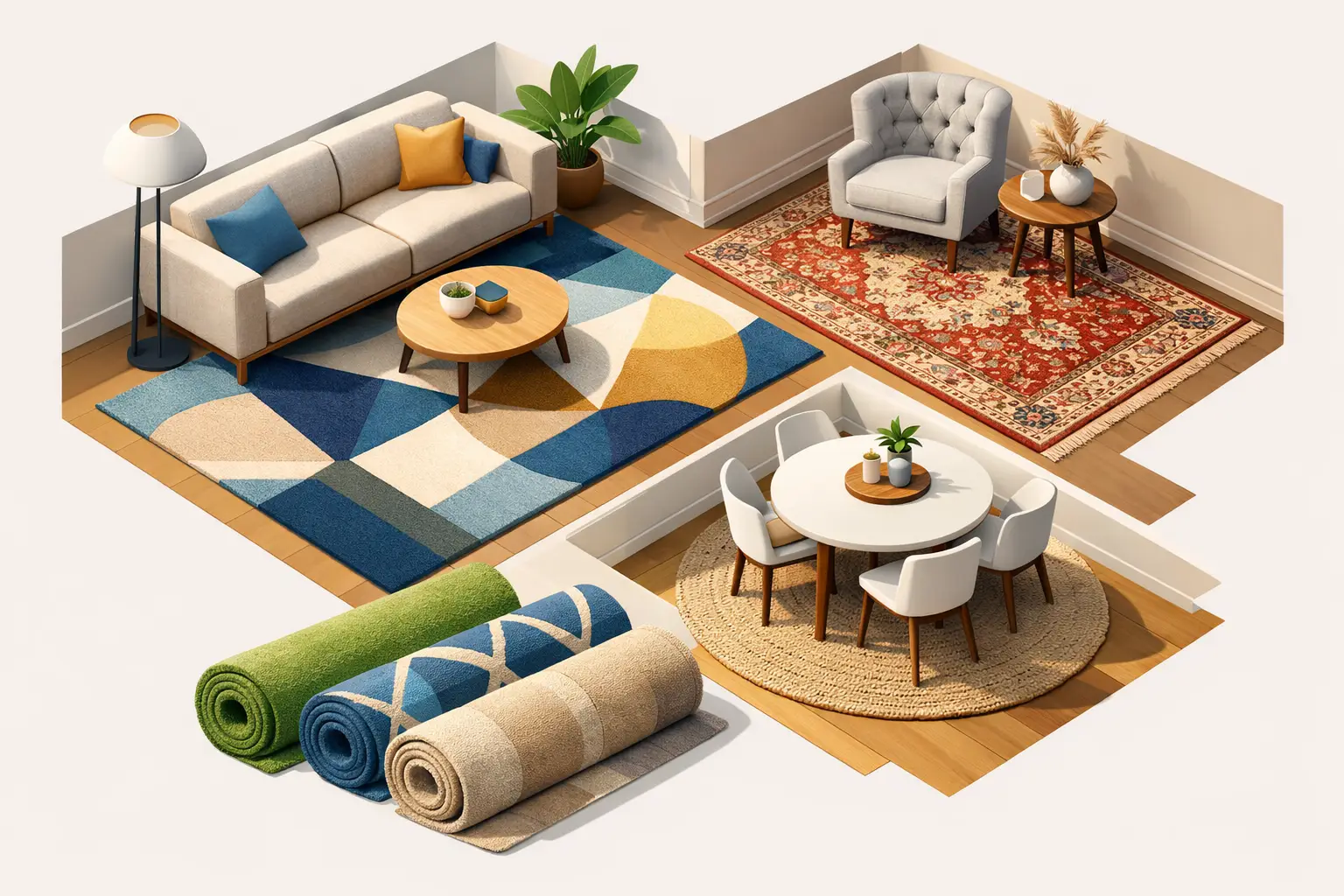
A rug that is too small can make a furnished room look unfinished. One that is too large can hide beautiful flooring, crowd doorways, and spend more of your budget than necessary. The right Area rugs add warmth underfoot, define a room, reduce noise, and help protect hard-surface floors without turning a simple refresh into a complicated project.
For practical households, the best choice comes down to four things: correct size, the traffic in the room, a material that fits your cleaning routine, and a price that leaves room in the budget for the rest of your home essentials.
Start With Area Rug Size, Not Color
Color and pattern catch the eye first, but size makes the bigger difference. A rug should connect the furniture in a room rather than float alone in the center. Before shopping, measure the seating area, dining table, or bed and note where doors swing open.
In a living room, a common mistake is choosing a rug that only fits under the coffee table. A better fit usually allows the front legs of the sofa and chairs to sit on the rug. In a larger room, placing all furniture legs on the rug can create a more grounded, finished look. Leave a visible border of flooring around the rug whenever possible so the room does not feel cramped.
For a dining room, measure the table, then add enough space for chairs to remain on the rug when pulled out. This keeps chair legs from catching on the rug edge during meals. In bedrooms, a large rug can sit under the lower two-thirds of the bed and extend beyond both sides. If you prefer a lower-cost option, runners or smaller rugs on each side still provide a warm landing spot in the morning.
Choose Materials for Real Life
The best rug material depends on where it will be used. A plush, high-pile rug feels great in a bedroom but may not be the right choice for a busy entryway. Think about pets, children, shoes, spills, and how often you want to vacuum.
Synthetic fibers such as polypropylene and polyester are popular for active homes because they are typically affordable, colorfast, and easier to clean than many natural fibers. They work well in family rooms, dining areas, entry spaces, and other places where everyday messes happen.
Wool offers natural softness, durability, and a more substantial feel. It can be a smart long-term option for low- to medium-traffic spaces, but it generally costs more and may need more careful cleaning. Natural-fiber rugs such as jute and sisal bring texture to a room and suit casual spaces, although their rougher surface and limited stain resistance are not ideal for every household.
Low-pile rugs are usually the most practical choice beneath dining tables, office chairs, and furniture with doors or drawers nearby. High-pile and shag styles are better reserved for bedrooms or low-traffic spaces where softness matters more than easy cleanup.
Match the Rug to the Room’s Job
A rug should work as hard as the room does. In an entryway, look for a durable, low-profile option that handles dirt and allows the door to clear. In a living room, focus on size and comfort, especially if the space is where your household gathers to watch TV, play games, or relax.
Bedroom rugs should make getting out of bed more comfortable. Neutral colors can support bedding changes over time, while a patterned rug can help hide everyday wear. For RV owners, a thin, easy-to-clean rug can soften compact interiors without creating a tripping hazard or getting in the way of slide-outs and storage access.
A patterned rug is often the practical answer for homes with pets or children because it can disguise minor stains and tracked-in debris better than a solid light color. That does not mean every room needs a bold design. A neutral rug with visible texture can deliver the same forgiving effect while keeping the room easy to coordinate.
Do Not Skip the Rug Pad
A rug pad is a small add-on that protects a larger purchase. On hard floors, it helps prevent sliding, reduces bunching, and adds cushioning. It can also reduce wear by keeping the rug from rubbing directly against the floor.
Choose a pad made for your floor type. Some backings are not recommended for certain finishes, including vinyl or sealed hardwood. Check the product guidance before placing any rug or pad on a new or delicate surface. The pad should be slightly smaller than the rug so it stays hidden and the edges lay flat.
Get More Value From Your Rug Purchase
The lowest price is not always the best value if a rug is the wrong size, sheds excessively, or does not fit your cleaning routine. Compare dimensions carefully, review the pile height and material, and think about how the rug will look after six months of actual household use.
Shopping for coordinated home essentials at 4 The Abode can also make a room refresh easier on the budget. A new rug, bedding, and bedroom accents do not have to be luxury-store purchases to make a space feel more comfortable and complete.
Measure first, choose the material for the traffic you have, and use a pad where it makes sense. Those three decisions will do more for the look and lifespan of your rug than chasing the latest color trend.

Leave a Reply