
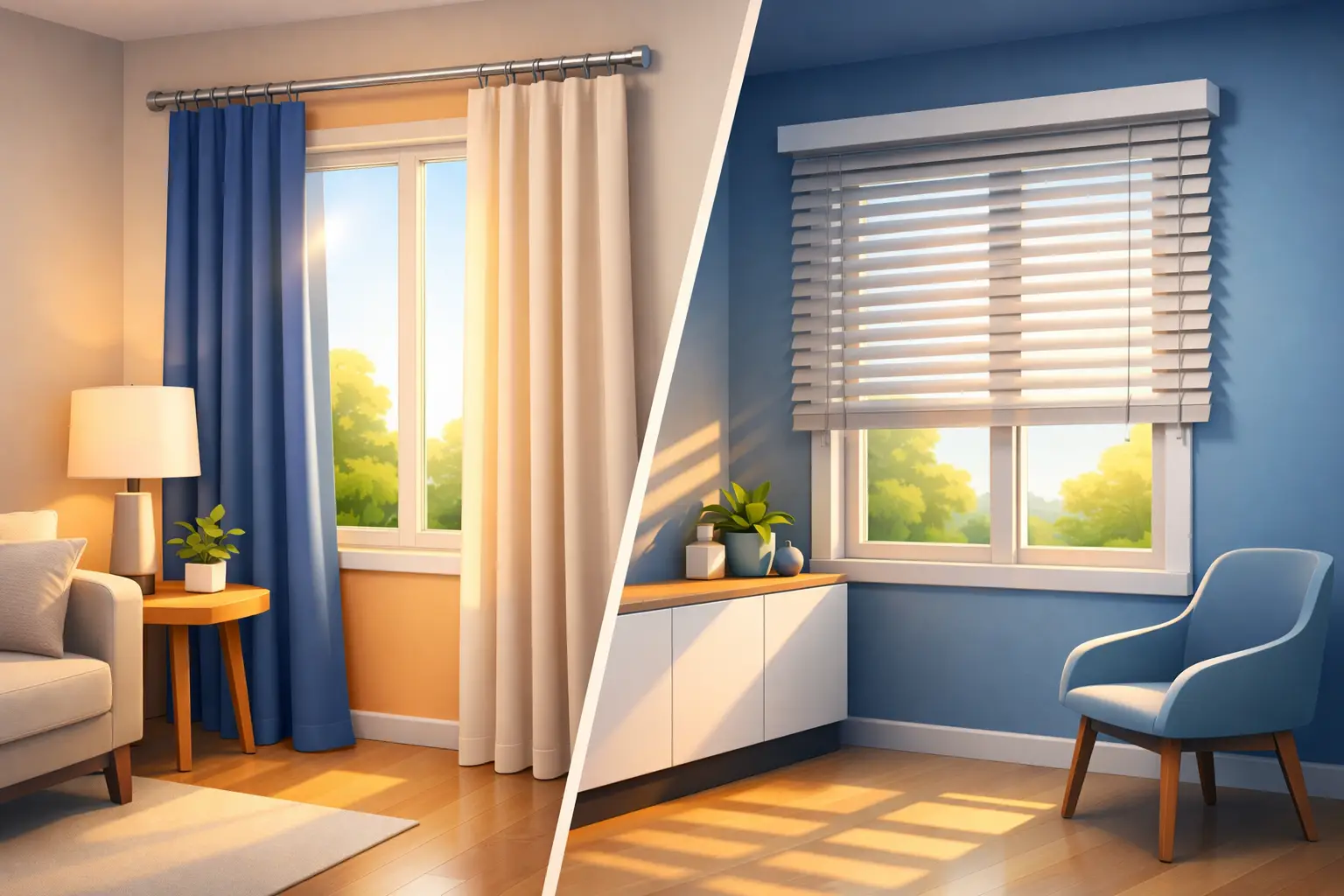
A bedroom can have a comfortable mattress, fresh sheets, and the right pillows, yet still feel unfinished when the windows are bare or poorly covered. Window treatments affect how you sleep, how private your room feels, and how much heat enters or leaves the space. When deciding on curtains versus blinds, the better choice comes down to the room, the amount of light you want to manage, and how much maintenance you are willing to handle.
Both options can work in a practical home. Blinds offer controlled light and a compact fit. Curtains add softness, insulation, and broader style options. The right answer is not always one or the other.
Curtains Versus Blinds: The Main Differences
Curtains are fabric panels that hang from a rod or track. They can be sheer, room-darkening, blackout, insulated, patterned, or simple and neutral. Because fabric comes in many weights and colors, curtains make a noticeable visual difference in a room.
Blinds are made from slats or panels that raise, lower, or tilt. Common choices include faux wood, wood, aluminum, vinyl, and vertical blinds. They generally sit closer to the window than curtains, making them a practical choice when you need a clean profile or have limited space around the window.
The biggest difference is how they handle light. Curtains usually operate in two settings: open or closed. Blinds give you more adjustment throughout the day. Tilt the slats slightly to reduce glare while keeping some daylight in, or close them fully for more privacy.
That control does not automatically make blinds the best option for every room. If you need a darker sleep environment, a properly sized blackout curtain often blocks more light around the edges than standard blinds alone. If your priority is daytime privacy without making a room feel closed in, blinds can be easier to fine-tune.
Choose Curtains When Comfort and Darkness Matter
Curtains are often the better fit for bedrooms, nurseries, guest rooms, and living spaces where warmth matters as much as function. A lined or insulated curtain helps reduce drafts from older windows and can soften outside noise. That can make a bedroom feel more settled, especially if the window is near a busy street.
Blackout curtains are a strong choice for people who work night shifts, wake easily with the sun, or need a better sleep setup for children. Look for panels that extend beyond the window frame and reach close to the floor. A curtain that is too narrow or too short may look fine at first glance but will leave light gaps that defeat the purpose.
Curtains also work well when a room needs visual balance. In a bedroom, fabric panels can make a window look larger and help connect bedding, rugs, and other furnishings. You do not need an expensive custom treatment to get that effect. A simple solid-color panel in the right length can make the room look more finished without pushing the budget.
The trade-off is upkeep. Fabric collects dust and may absorb odors, especially in homes with pets, smokers, or frequent cooking nearby. Some curtains are machine washable, while others require spot cleaning or dry cleaning. Always check the care instructions before buying, particularly for heavy lined or blackout panels.
Choose Blinds When Adjustability Is the Priority
Blinds are a practical choice for kitchens, bathrooms, home offices, and windows that need frequent light adjustment. In a home office, for example, tilting slats can cut screen glare without putting the room into complete darkness. In a bathroom, moisture-resistant faux wood, vinyl, or aluminum blinds are often easier to manage than fabric curtains.
Blinds are also useful for smaller windows and tight layouts. If a bed, dresser, or desk sits close to the window, a blind may be less likely to get caught behind furniture or take up valuable wall space. Their lower profile can make a room feel cleaner and less crowded.
Cleaning is usually more straightforward, but it is not always fast. Slats need regular dusting, and grease or moisture can build up in kitchens and bathrooms. Faux wood and vinyl options are generally easier to wipe down than real wood. Real wood can offer a warmer appearance, but it may not be the best choice in high-humidity spaces.
For households with young children or pets, cordless blinds are the safer choice. Loose cords can create a hazard, so choose cordless lift systems or wand controls whenever possible. This is a small detail that matters more than color or finish.
Light Control and Privacy by Room
The room should guide the purchase. A single window treatment style does not have to work everywhere in the house.
In bedrooms, blackout curtains or layered curtains and blinds are often worth the extra cost. Better darkness can support more restful sleep, while the added fabric brings a softer, more comfortable feel to the room. If outside lights are a problem, consider blinds underneath blackout panels for stronger coverage.
Living rooms benefit from flexibility. Sheer curtains can filter harsh daylight while keeping the room bright, while blinds offer more precise glare control for TV viewing. If the room faces a street or neighboring home, layering can give you privacy in the evening without losing natural light during the day.
Kitchens and bathrooms need materials that handle moisture and mess. Blinds are usually the more practical option, particularly faux wood or vinyl. Long curtains near a sink, stove, or bathtub can pick up splashes, odors, and stains quickly.
For RVs and compact rooms, blinds often make sense because they stay close to the window and do not crowd a limited layout. Still, short insulated curtains can help with temperature control and privacy if the window is exposed to direct sun.
Cost, Energy Use, and Long-Term Value
Basic blinds can be an affordable way to cover multiple windows quickly. Standard sizes are widely available, and installation is often simple with basic tools. However, low-cost blinds may bend, discolor, or develop operating problems sooner than better-made options. Buying the least expensive option can cost more over time if you have to replace it within a few years.
Curtains can be budget-friendly too, especially with ready-made panels. The cost rises with thicker fabric, blackout lining, extra width, and custom sizing. Before spending more, measure carefully. Curtains generally look best when the total panel width is at least one and a half to two times the width of the window.
Energy savings depend on the product and the window itself. Insulated curtains can help reduce heat transfer, particularly at night or during extreme weather. Blinds can reduce direct solar heat when their slats are closed or angled correctly, but gaps between slats may still allow heat and light through.
If heating and cooling costs are a concern, do not judge value by the purchase price alone. A well-fitting insulated curtain in a drafty bedroom may be a smarter buy than a cheaper treatment that offers little temperature control.
The Case for Using Both
You do not have to settle the curtains versus blinds question with one product. Combining them is often the most functional solution. Blinds provide daytime control, while curtains improve darkness, insulation, and appearance.
This approach works especially well in bedrooms. Use blinds to adjust morning light and maintain privacy, then close blackout curtains at night for a darker, quieter space. In a living room, blinds paired with lighter panels give you privacy when needed without making the room feel heavy.
Layering does add cost, and it can look cluttered in a small room if the fabrics and finishes compete. Keep the look simple. Choose a blind color that blends with the trim and curtains that coordinate with the bedding, rug, or wall color.
Measure Before You Buy
Most window-treatment mistakes begin with rushed measurements. Measure the window width and height more than once, then decide whether the treatment will mount inside the frame or outside it. Inside-mounted blinds need accurate clearance. Outside-mounted curtains and blinds can cover more of the window frame and help reduce light gaps.
For curtains, decide how high the rod will sit before choosing length. Mounting a rod several inches above the frame can make the ceiling appear taller. For blinds, check for handles, cranks, trim, and nearby furniture that could interfere with operation.
A practical window treatment should earn its place every day. Choose blinds when you need adjustable light, easy wipe-down cleaning, and a compact fit. Choose curtains when your priority is blackout coverage, softness, insulation, or a more finished bedroom. For many homes, the best value is a simple layered setup that improves privacy and sleep without overspending. At 4 The Abode, building a more comfortable room starts with practical choices that fit both your space and your budget.

Leave a Reply