
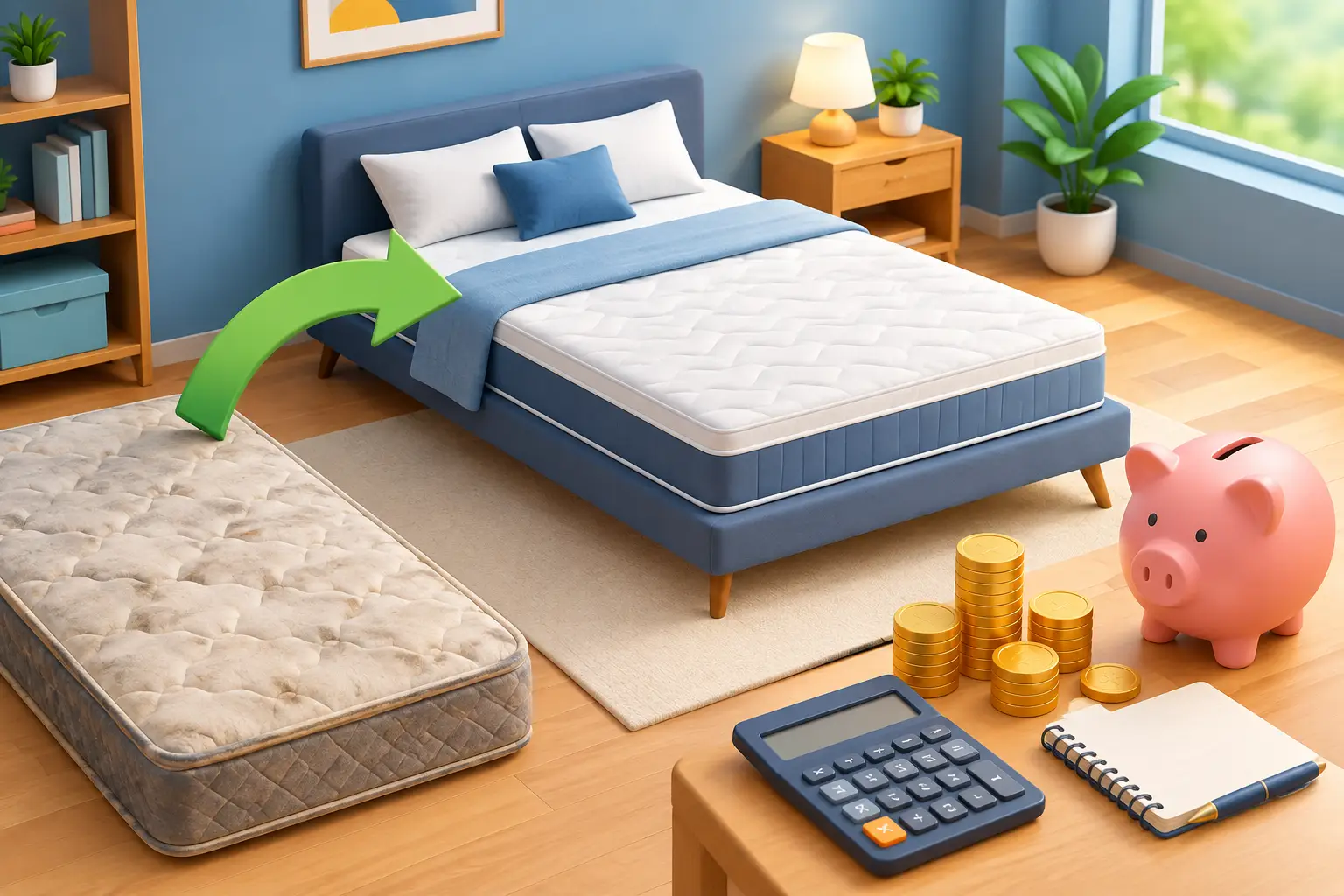
That sagging spot, the morning backache, or a mattress that has outlasted its best years can turn a simple purchase into a budget question. A mattress replacement cost example gives you a practical number to work from before you shop, including the pieces you may need beyond the mattress itself.
For most households, replacing a mattress can cost anywhere from roughly $400 for a basic twin setup to $2,000 or more for a premium king sleep system. The right budget depends on size, material, support needs, whether your current foundation still works, and whether you are replacing bedding at the same time. The goal is not to spend the most. It is to get dependable comfort and durability at a price that makes sense.
A Realistic Mattress Replacement Cost Example
Consider a queen mattress replacement for a primary bedroom. You choose a quality foam or hybrid mattress priced at $799. Your existing box spring is worn or incompatible, so you add a new foundation for $199. A mattress protector costs $49, and a pair of pillows adds $70.
Your total is $1,117 before any applicable taxes. If the retailer charges delivery, removal, or shipping fees, the final cost can climb quickly. Free shipping can make a meaningful difference, especially on a larger mattress that is expensive to move.
That example is not a rule. A guest-room shopper may spend less by keeping an existing foundation and choosing a simpler mattress. A couple moving up to a king may spend more because the mattress, foundation, sheets, protector, and bed frame accessories all increase with size.
What Makes a New Mattress Cost More or Less?
The mattress is the largest line item, but it is not the only one. Knowing where your money goes helps you compare complete costs instead of reacting to a single sale price.
Mattress Size
Size affects nearly every part of the purchase. Twin and full mattresses are generally the least expensive, making them practical choices for children’s rooms, dorm-style spaces, and smaller guest rooms. Queen is the most common size for adults and usually offers the widest selection. King and California king mattresses cost more because they use more materials and require larger bedding.
A queen mattress may fit a household’s budget comfortably, while moving to a king can add several hundred dollars before you account for new sheets and a larger protector. If your room is tight, paying more for extra width may not improve the overall sleep setup.
Mattress Type and Construction
Basic innerspring mattresses tend to sit at the lower end of the price range. Memory foam can offer pressure relief and motion isolation at a range of price points. Hybrid mattresses combine foam layers with coil support and often cost more, though they can be a strong value for shoppers who want both contouring and easier movement.
Price alone does not tell you whether a mattress will feel right. Consider firmness, edge support, cooling needs, body weight, sleep position, and whether you share the bed. A lower-priced mattress that supports you well is a better buy than an expensive model that leaves you uncomfortable after a few weeks.
Foundation, Frame, and Support
Do not assume your old base can support a new mattress. Some mattresses work well on a platform bed, while others need a compatible foundation or closely spaced slats. Check the mattress requirements before checkout. Using the wrong support can affect comfort, durability, and warranty coverage.
If your bed frame is sturdy and your slats are in good condition, you may not need to replace anything underneath the mattress. If the frame squeaks, flexes, or has damaged support rails, budgeting for a foundation or frame is the practical move. It is easier to replace a weak base now than to wonder why a new mattress feels uneven later.
Bedding and Protection
New bedding is optional, but some add-ons are worth pricing from the start. A mattress protector helps guard against spills, sweat, dust, and everyday wear. It is a small percentage of the total purchase and can help keep the mattress cleaner over time.
Sheets, pillows, and pillow protectors are also part of the real cost when changing mattress sizes or refreshing an entire bedroom. If you are moving from a full to a queen or from a queen to a king, your current fitted sheets will not carry over. Build that into the budget rather than treating it as an unexpected expense after the mattress arrives.
Three Budget Ranges to Consider
A practical replacement plan starts with the room and the job the mattress needs to do.
For a guest room or child’s room, a basic twin or full mattress setup may land between $400 and $800. That can include a value-focused mattress, a protector, and simple bedding if the current frame is usable. This range works when the bed is used occasionally or when you need reliable comfort without overbuying.
For a primary bedroom, many queen setups fall between $800 and $1,500. In this range, shoppers can often choose a better-built foam or hybrid mattress, add a compatible foundation if needed, and include essential protection. This is a sensible target for buyers replacing a mattress that gets nightly use.
For a king mattress or a more complete bedroom refresh, expect $1,400 to $2,500 or more. The higher total may include a larger premium mattress, foundation, protector, pillows, and new king-size sheets. It can be worthwhile if you need more space, sleep with a partner, or want to replace an aging sleep setup all at once.
How to Keep Your Replacement Cost Under Control
Start by separating needs from nice-to-haves. The mattress and proper support come first. A protector is a smart add-on for most households. Decorative bedding, extra pillows, and a new bed frame can wait if they are not necessary now.
Next, measure your room and inspect your existing bed frame before you buy. This avoids paying for the wrong size or ordering a foundation you do not need. RV owners should also measure carefully, because an RV mattress may use a short queen, bunk, or another nonstandard size that does not match a typical bedroom mattress.
Then compare the complete checkout price. A low mattress price can lose its advantage once shipping, delivery, setup, or removal fees are added. Look for clear shipping information and a price guarantee that gives you confidence you are not paying more than necessary.
Finally, think in years, not just in today’s sale price. A mattress used every night should provide consistent support and hold up to real household use. Choosing a dependable option at an affordable premium price can be more cost-effective than replacing an ultra-cheap mattress again too soon.
When Is It Time to Replace the Mattress?
Many mattresses last about seven to 10 years, but age is only one signal. Visible sagging, deep body impressions, torn fabric, damaged springs, worsening allergies, and regular discomfort are stronger reasons to start shopping. If you sleep better in a guest room, hotel, or on another bed in your home, your mattress may no longer be doing its job.
A replacement also makes sense after a major change in your sleep needs. An injury, pregnancy, a new partner, a move to a larger home, or more frequent RV travel can change what you need from a mattress. Waiting until the bed becomes completely unusable is not always the best savings strategy, especially when poor sleep follows you into every day.
When you are ready to buy, set a realistic total budget, confirm the support requirements, and price the bedding you truly need. At 4 The Abode, practical shoppers can focus on comfort, essentials, and a straightforward value instead of paying luxury-store prices for a better night’s sleep.

Leave a Reply