
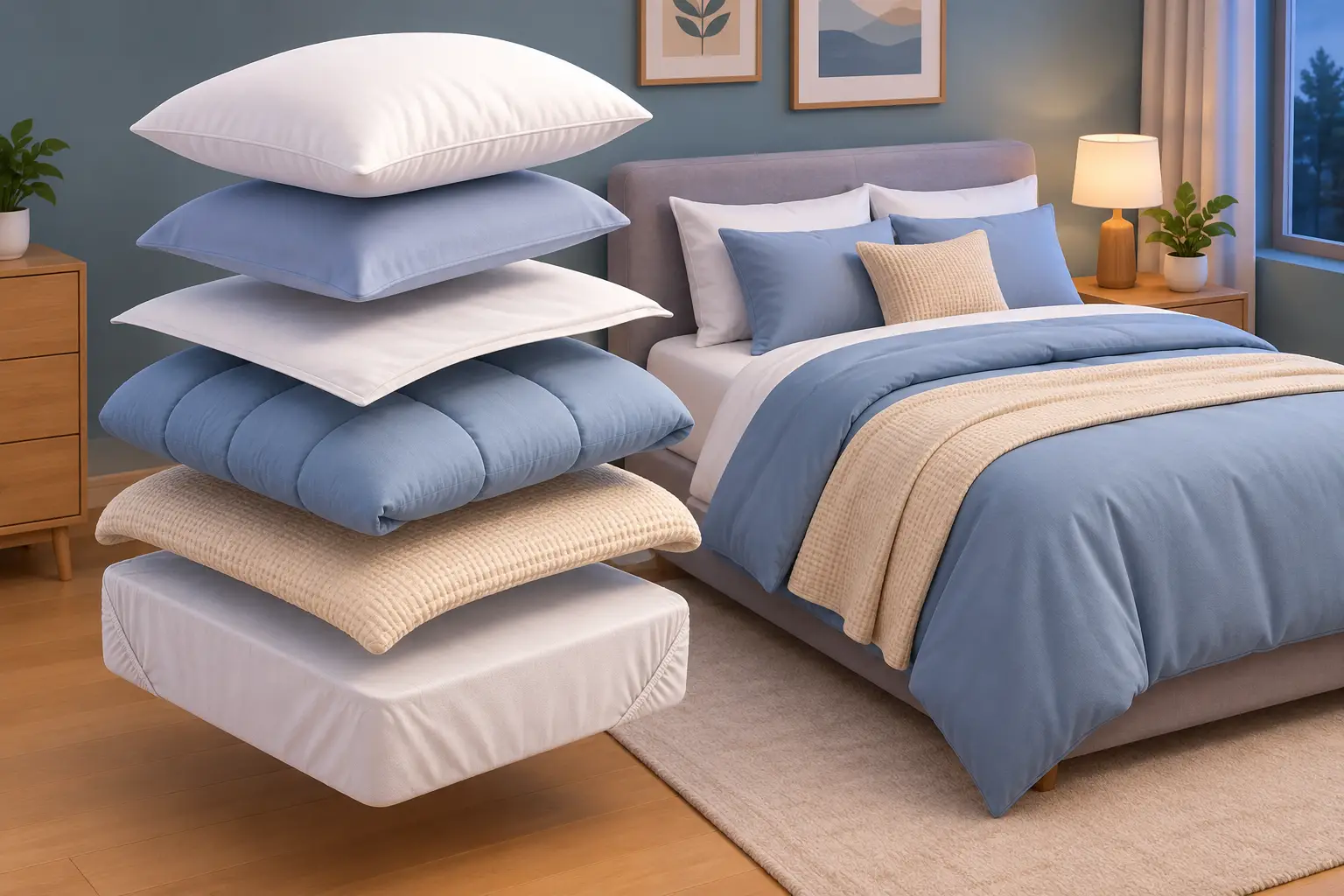
A bed can look put together and still sleep poorly. The difference is usually the order of the layers, the weight of each piece, and whether the setup works for your room temperature. Learning how to layer bedding correctly helps you build a bed that feels comfortable every night, looks clean during the day, and is easier to adjust when the weather changes.
For most households, the best approach is simple: start with protection, add breathable sheets, then build warmth in layers you can remove or add without remaking the entire bed. You do not need a long list of decorative items to get a better result. You need dependable basics that fit your mattress and match how you actually sleep.
Start With the Mattress and Protection
Good bedding starts below the sheets. If your mattress is aging, sagging, or no longer supportive, no comforter can fully solve the problem. But a quality mattress protector can help keep a newer mattress cleaner and better protected from everyday spills, sweat, dust, and allergens.
Place the mattress protector directly over the mattress. Choose one that fits the mattress depth, especially if you use a thicker pillow-top mattress, adjustable base, or RV mattress. A protector should stay smooth under the sheet instead of bunching at the corners.
This first layer is practical, not decorative. It can help extend the usable life of your mattress and gives you one less concern when kids, pets, drinks, or everyday accidents happen. If you use pillows without covers, add pillow protectors as well. They provide another washable barrier beneath your standard pillowcases.
Add a Fitted Sheet That Actually Fits
The fitted sheet is your first comfort layer. Put it over the mattress protector with the elastic corners pulled fully beneath the mattress. A loose fitted sheet can shift overnight, create uncomfortable wrinkles, and make a neatly made bed look sloppy by morning.
Check the pocket depth before you buy. Standard sheets may not fit a deep mattress, while oversized pockets can leave excess fabric around a thinner mattress. The right fit matters more than an overly complicated thread-count claim. Look for sheets that feel comfortable against your skin, wash well, and hold their shape.
Cotton is a reliable choice for many sleepers because it is breathable and familiar. Microfiber can be soft, affordable, and easy to care for, though some hot sleepers may prefer a more breathable fabric. If you sleep warm, prioritize airflow and lighter layers rather than relying on one heavy comforter.
How to Layer Bedding Correctly From Sheets Up
Once the fitted sheet is secure, place a flat sheet over it with the finished edge aligned near the top of the mattress. Leave enough fabric at the sides and bottom to tuck in if you prefer a tighter, hotel-style finish. For a more relaxed bed, let the flat sheet hang naturally and fold it back later over the top blanket or comforter.
A flat sheet is optional. Some people like the extra lightweight layer because it keeps the comforter cleaner between washes and makes temperature changes easier. Others skip it because they prefer fewer pieces of bedding. Neither choice is wrong. Use the setup that makes laundry and nightly comfort easier for your household.
Next comes your middle warmth layer: a blanket, coverlet, lightweight quilt, or similar piece. This layer does most of the practical work in a flexible bedding setup. It gives you warmth without the bulk of a heavy comforter and can be used alone during warmer months.
Then add your top layer, usually a comforter, duvet, or quilt. A comforter offers straightforward all-in-one warmth. A duvet insert inside a removable cover makes washing the outer layer easier and lets you change the look of the bed without replacing the insert. A quilt is often lighter and works well for warm sleepers, guest rooms, and RV sleeping spaces where bulky bedding can take up valuable storage room.
The key is not using every possible layer. The key is choosing layers with different jobs. Sheets provide a clean, soft base. A blanket or coverlet provides adjustable warmth. The comforter, duvet, or quilt provides the main finish and the biggest temperature boost.
Choose Warmth Based on the Room, Not the Calendar
Many people make the bed for the season, then wonder why they wake up too hot or too cold. Bedroom temperature, personal sleep style, and whether you share the bed matter more than the month on the calendar.
If your room stays warm, use breathable sheets, a lightweight blanket, and a quilt or light comforter. If the room is cool or you tend to sleep cold, add a medium-weight blanket under a comforter or duvet. A separate blanket is often a smarter buy than one overly heavy top layer because it gives you more control.
Couples with different temperature preferences can also use separate blankets beneath one shared comforter. It is a simple fix that avoids nightly battles over the covers. In a guest room, a medium-weight comforter with a folded extra blanket at the foot of the bed gives visitors options without making the bed look overloaded.
Finish the Bed Without Adding Unnecessary Bulk
After the functional layers are in place, make the bed look intentional. Pull the top layer evenly across the mattress, letting it hang at a similar length on both sides. Fold the top edge of the comforter or duvet down slightly to show the flat sheet or blanket beneath it. This creates a finished look without requiring extra decorative bedding.
Place your sleeping pillows first. Standard, queen, or king pillows should sit against the headboard or wall, depending on the bed size. Add shams or accent pillows only if they serve a purpose you like. Too many pillows can turn a simple morning task into a daily chore, especially in busy households.
A folded throw at the foot of the bed can add a little extra warmth and a finished appearance. It is useful in a cool room or for afternoon naps. If it only ends up on the floor, skip it. Bedding should work for your routine, not create more work.
Keep Each Layer Easy to Wash and Replace
A well-layered bed is easier to maintain because the pieces can be cleaned on different schedules. Sheets and pillowcases need regular washing. Mattress and pillow protectors should be washed according to their care labels. Blankets, quilts, comforters, and duvet covers generally need less frequent cleaning, but they should still be checked for stains, odors, and wear.
Before buying a bulky comforter or oversized blanket, make sure it can fit in your home washing machine or that you are prepared to use a larger machine when needed. This is especially important for king beds. A bedding set that is difficult to clean can become a poor value, no matter how good it looks on day one.
It also helps to keep a second sheet set on hand. When laundry day comes, you can remake the bed immediately instead of waiting for sheets to dry. For RV owners, compact layers that wash easily and store without taking up too much space are usually the most practical choice.
Build a Bed That Works Every Night
The best bedding arrangement is not the thickest, trendiest, or most expensive one. It is the one that fits your mattress, supports your sleep temperature, and holds up to regular use. Start with a protected mattress, use sheets that fit, add adjustable warmth, and keep decorative extras limited to what you will actually use.
When you are refreshing a bedroom, replacing worn basics first often delivers the biggest comfort upgrade for the money. At 4 The Abode, practical sleep essentials make it easier to build the layers you need without paying luxury-store prices. A properly layered bed should feel simple when you climb into it and even simpler when you make it the next morning.

Leave a Reply