
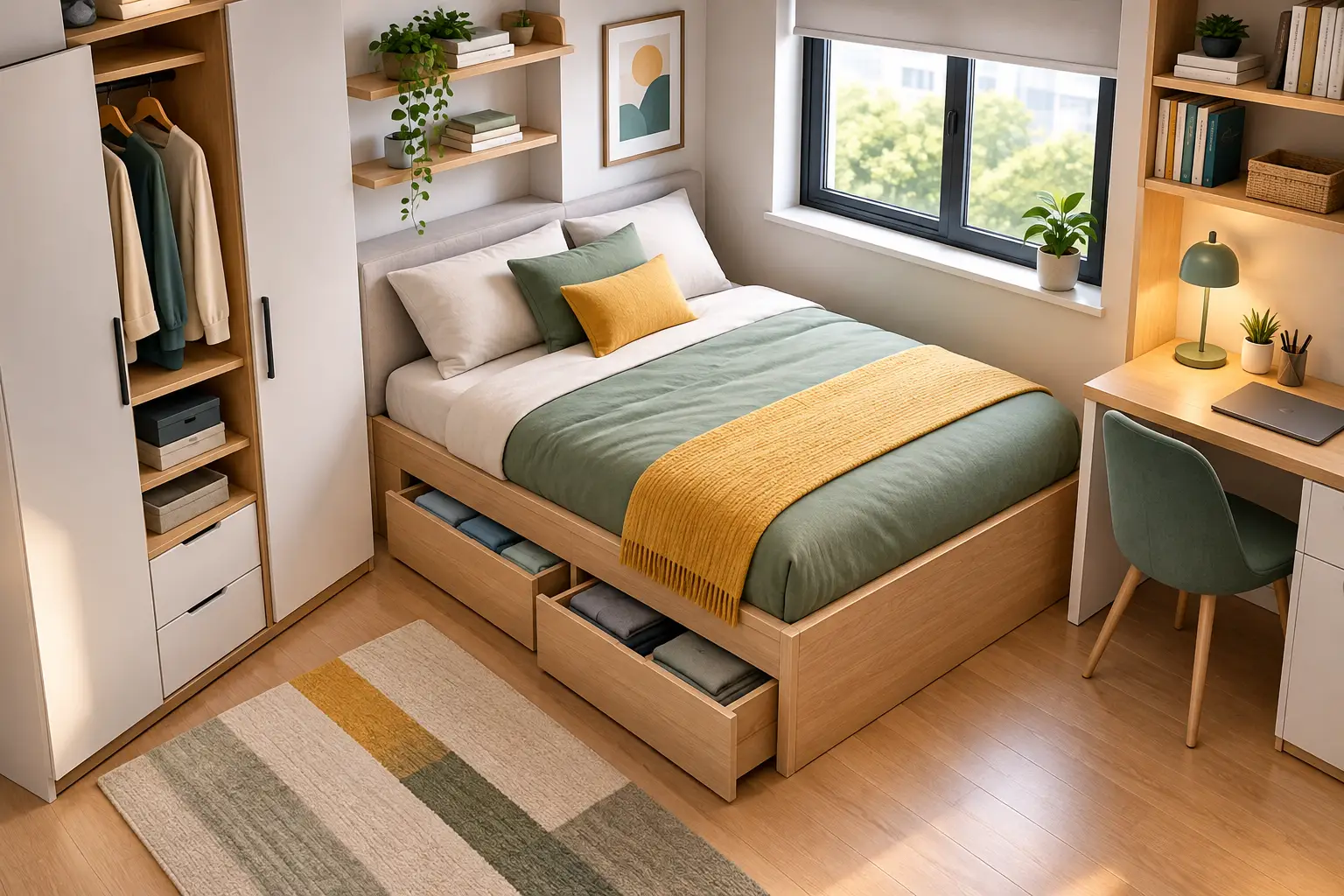
A small bedroom gets frustrating when every piece of furniture asks for more floor space than it gives back. The best furniture for small bedrooms does the opposite: it supports comfortable sleep, stores everyday essentials, and leaves enough open room to move without bumping into corners.
This is not about cramming a full-size bedroom set into a smaller footprint. It is about buying fewer, smarter pieces that earn their place. Start with the bed, measure carefully, and choose storage that works vertically or does double duty. That approach can make a compact primary bedroom, guest room, apartment bedroom, or RV sleep space feel far more usable.
Start With the Bed, Not the Bedroom Set
The bed is the largest item in most bedrooms, so it should determine the rest of the layout. A bed that is only a few inches too wide can block a closet door, eliminate a nightstand, or turn the path around the room into a daily squeeze.
Before shopping, measure the room’s length and width, then mark the swing of the entry door and closet doors. Include windows, radiators, wall vents, and outlets. It also helps to use painter’s tape on the floor to outline the dimensions of the bed you are considering. You will see quickly whether a queen leaves workable walking room or whether a full bed is the better value for the space.
A smaller mattress does not automatically mean less comfort. For one sleeper, a quality full mattress can provide ample room while freeing up valuable square footage. Couples may prefer a queen, but they should consider a low-profile frame, a platform bed without an oversized footboard, or a storage bed that eliminates the need for another bulky piece.
Choose a Low-Profile Frame When Visual Space Matters
Low-profile beds keep the room from feeling top-heavy, especially under lower ceilings or in rooms with limited natural light. An open metal frame or a simple platform bed can make the floor line easier to see, which creates a more open appearance.
The trade-off is storage. A frame with exposed legs may leave room for bins underneath, but only if the clearance is high enough and you are willing to keep those bins organized. If hidden storage is the priority, choose a frame with built-in drawers or a lift-up platform. Just confirm that drawer placement works with the walls and the room’s traffic flow.
Consider a Daybed or Murphy Bed for Flexible Rooms
For a room that serves as an office, den, or occasional guest space, a daybed can deliver seating by day and sleeping space at night. It works particularly well with a twin mattress and a trundle for occasional visitors. A Murphy bed can free up even more floor area when closed, though installation and hardware costs are higher.
These options are practical when the room has more than one job. For a bedroom used every night, however, do not sacrifice mattress comfort simply to gain open floor during the day. Good sleep is still the priority.
Best Furniture for Small Bedrooms: Storage That Earns Its Space
In a compact room, every storage item should solve a real problem. Decorative cabinets and oversized dressers can consume space without holding the items you use most. Look for furniture that combines storage with another function, or take storage upward instead of outward.
A storage bed is often the strongest single purchase because it uses the footprint already reserved for sleep. Under-bed drawers are useful for off-season clothing, extra sheets, blankets, or pillows. Lift-up storage beds offer a larger open compartment, which can be better for bulky bedding, but they are less convenient for items you need every week.
Tall, narrow dressers are another smart option when wall height is available. They occupy less floor space than wide low dressers while providing room for folded clothing. Secure tall furniture properly, especially in homes with children or pets, and avoid filling the top with items that make the room feel cluttered.
Wall-mounted shelves can replace a bookcase, while floating nightstands can replace table-style nightstands that take up floor space. A narrow shelf installed beside the bed may hold a phone, glasses, a book, and a small lamp without requiring a full drawer unit.
If you need a traditional nightstand, choose one with a drawer or cabinet instead of a purely decorative table. The surface stays useful, and smaller loose items stay out of sight. In very tight rooms, one nightstand may be enough. Symmetry looks nice, but usable clearance matters more.
Use Vertical Space Without Making the Room Feel Crowded
Small bedrooms can handle more storage than they appear to, but the placement matters. Keep frequently used items within easy reach and reserve high shelves for seasonal items, extra bedding, or luggage. Storage that reaches upward is usually more efficient than another wide piece on the floor.
A wardrobe or armoire can help when closet space is limited, but measure its depth before ordering. Many are deep enough to project too far into a narrow room. A shallower wardrobe, clothing rack, or wall-mounted organizer may fit better depending on what you need to store.
The same rule applies to headboards. A headboard with built-in shelves can replace bedside storage, but it should not extend so far into the room that it crowds the sleep area. In a small bedroom, simple and useful beats oversized and decorative.
Mirrors can also make a compact room feel less closed in, especially when placed across from a window or near a natural light source. A full-length mirror mounted on a wall or door is usually more space-efficient than a freestanding mirror.
Keep the Mattress Comfortable and the Profile Practical
A mattress is not furniture in the traditional sense, but it affects every furniture decision around it. Mattress thickness changes the height of the bed, and a high mattress paired with a tall foundation and a bulky frame can overwhelm a small room.
A platform bed may allow you to skip a foundation, lowering the overall profile while maintaining reliable mattress support. This can be a practical choice for bedrooms where you want a cleaner look or need a bed that is easier to get into. If you already have a foundation, make sure the combined height still works with your headboard, nightstand, and storage plan.
Do not buy a thinner mattress solely to save visual space if it compromises support. The better choice is a mattress that fits your preferred sleep position, body type, and comfort needs, paired with a frame designed for a lower profile. Mattress protectors are also worth considering in a small room, where replacing a stained or damaged mattress is an expense nobody needs.
For RV bedrooms, measure even more carefully. RV mattress sizes and corner shapes can vary, and standard furniture often will not fit through the entry or around built-in cabinetry. Purpose-built RV mattresses, compact bedside storage, and fitted bedding can make a tight sleeping area more comfortable without fighting the layout.
Skip These Common Small-Bedroom Mistakes
The biggest mistake is buying furniture as a matching set without considering the room’s actual dimensions. A coordinated bed, dresser, chest, two nightstands, and bench may look right in a showroom, but it can overwhelm a modest bedroom. Buy the pieces that meet your needs first, then add only what the room can comfortably hold.
Another mistake is overlooking clearance. Aim for a clear path from the door to the bed and closet. If drawers cannot open fully, a storage solution is not truly useful. If the bed blocks a window or forces you to climb in from one side, decide whether that compromise is acceptable before you buy.
Finally, avoid using every open surface as storage. Small rooms feel crowded faster when the top of the dresser, nightstand, and floor are all covered. Closed storage, a simple laundry solution, and a regular edit of unused items can make even basic furniture work better.
Shop for Function, Then Look for Value
The right setup does not require luxury-store pricing or a complete room makeover. Prioritize a supportive mattress, a bed frame suited to the room, and storage that eliminates the need for extra furniture. Free shipping and a strong price guarantee can also make it easier to put more of your budget toward the pieces that affect daily comfort.
At 4 The Abode, practical sleep essentials are built around that same idea: dependable comfort, straightforward choices, and better value for the bedroom you actually have. Measure first, choose furniture with a purpose, and let open floor space remain part of the plan. A small bedroom works best when it gives you room to rest, get ready, and live comfortably.

Leave a Reply