
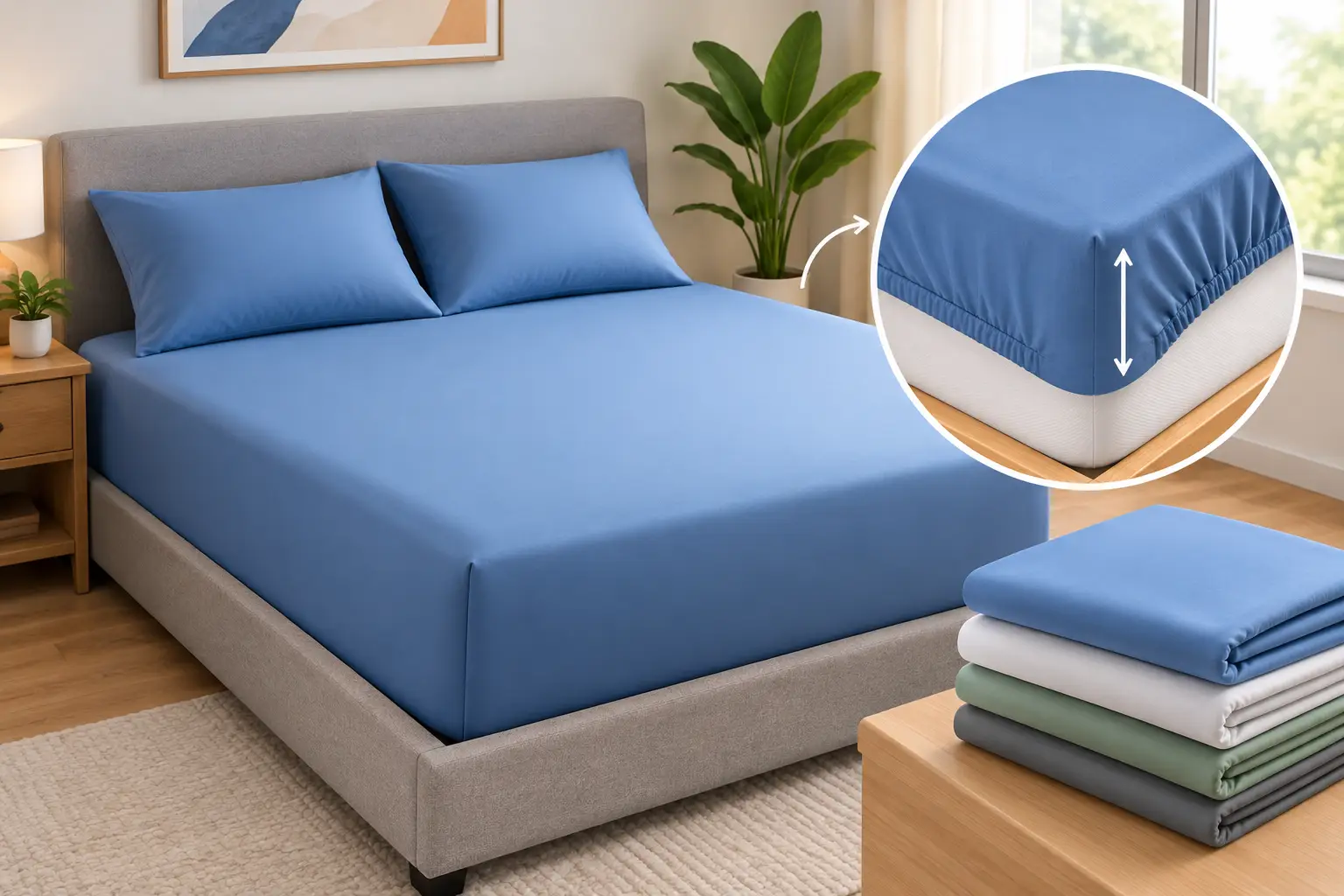
A fitted sheet that pops off one corner before breakfast is not a small annoyance. It is usually a sizing problem. This guide to deep pocket bedding helps you match sheets, mattress protectors, and bedding layers to the mattress you actually own, so your bed stays neat, comfortable, and easier to make.
Deep pocket bedding is made for mattresses that are taller than standard models. That extra height can come from a pillow top, a hybrid construction, a thick memory foam mattress, an adjustable-bed setup, or a topper added for more comfort. The right fit matters because bedding that is too shallow pulls tight at the corners, while bedding that is much too deep can bunch underneath you.
What Counts as Deep Pocket Bedding?
The phrase “deep pocket” usually refers to the depth of a fitted sheet’s corner pocket. Standard fitted sheets commonly fit mattresses around 7 to 14 inches deep. Deep pocket sheets generally fit mattresses in the 15- to 18-inch range, though exact measurements vary by manufacturer. Extra-deep pocket sheets may fit mattresses up to 20, 22, or even 24 inches deep.
Those labels are useful, but they are not a substitute for checking the package details. One brand’s deep pocket sheet may fit up to 16 inches, while another may be designed for an 18-inch mattress. A sheet labeled for a “deep mattress” can still be too small if your mattress and protector add up to more depth than the sheet allows.
Deep pocket bedding is not limited to sheets. Mattress protectors, bed skirts, and some fitted blankets are also sold in deeper sizes. If your mattress is tall, each fitted layer needs enough stretch and fabric depth to stay securely in place.
This Guide to Deep Pocket Bedding Starts With Depth
Before ordering anything, measure your mattress from the bottom edge to the highest point at the top. Use a tape measure and check near the center or side where the mattress is at its fullest height. Do not measure only the quilted surface or estimate based on the mattress description.
If you use a mattress protector, measure with it on the bed. The same goes for a topper. A 12-inch mattress with a 3-inch topper is now a 15-inch sleep surface, and standard-pocket sheets may not have enough room to wrap underneath it.
Width and length still matter, but they are more predictable. A queen sheet is intended for a queen mattress, for example. Depth is where many buyers run into trouble, especially when a mattress is plush, layered, or upgraded over time.
Leave Room for a Secure Fit
Choose a fitted sheet pocket that is slightly deeper than your total mattress height. If your mattress with protector measures 15 inches, a sheet rated for up to 18 inches is a sensible choice. That extra room lets the elastic reach underneath the mattress instead of barely clinging to the edge.
More depth is not always better. A 22-inch pocket sheet on a 12-inch mattress can leave excess fabric loose at the corners. It may still work, particularly if the elastic is strong and runs around the full perimeter, but it can create wrinkles and shifting. Buy for your measured depth rather than the biggest pocket available.
Choose Sheets Based on More Than Pocket Size
A well-fitting sheet starts with the right pocket depth, but material and construction affect everyday comfort and durability. Cotton feels familiar, breathable, and easy to care for. Microfiber can be soft and budget-friendly, though it may sleep warmer for some people. Cotton blends offer a practical middle ground for households that want low-maintenance bedding with a comfortable feel.
Look closely at the elastic. Fitted sheets with elastic all the way around the edge generally provide a more dependable hold than sheets with elastic only at the corners. Deep pocket sheets also benefit from reinforced corner seams, which help them handle the pull of a taller mattress.
If you sleep hot, prioritize breathable materials over thread-count marketing. A sheet with an appropriate depth and a comfortable weave will do more for your nightly comfort than an inflated number on a label. If you want bedding that feels smoother and more substantial, consider your preferred fabric finish, but do not trade away a proper fit for a particular texture.
Match Your Mattress Protector Carefully
A mattress protector is one of the most useful additions to a sleep setup. It helps guard against spills, sweat, allergens, and everyday wear that can shorten a mattress’s usable life. But a protector that is too shallow creates the same problem as an undersized fitted sheet: pulled corners, lifted edges, and constant readjusting.
Measure the protector’s stated depth against the full mattress height. Some protectors use stretchy side panels that accommodate a range of depths, while others have a more fixed fitted design. Stretch panels can be helpful for pillow-top mattresses and mattresses with toppers, but read the fit range instead of assuming “stretch” means it will fit anything.
For a mattress in an RV, depth can be especially important. RV mattresses may have nonstandard dimensions, rounded corners, or platform constraints that make ordinary bedding less reliable. Measure length, width, and depth before buying, and consider whether the mattress has room to tuck a deeper fitted layer underneath.
Common Deep Pocket Bedding Mistakes
The most common mistake is buying sheets based on mattress size alone. A king mattress can be slim or exceptionally tall. The word “king” tells you the width and length, not whether a standard fitted sheet will stay on it.
Another mistake is measuring an old mattress but forgetting a new topper or protector. If you are refreshing the entire bed, plan the layers together. The final stack height is the number that matters.
Buyers also sometimes assume a loose top sheet means the fitted sheet is too large. These are separate issues. A flat sheet can feel generous by design. The fitted sheet should be snug at all four corners with enough fabric tucked under the mattress to stay put when you move.
Finally, do not ignore care instructions. High heat can gradually weaken elastic and cause some fabrics to shrink. Washing and drying bedding as directed helps preserve the fit you paid for, particularly with deeper fitted corners that already work harder than standard sheets.
A Practical Way to Build the Bed
Start with the mattress, then add a properly sized protector if you use one. Measure the completed height. Choose a fitted sheet whose stated depth gives you a few inches of room, then add your flat sheet, blanket, comforter, or duvet based on the coverage and warmth you prefer.
For couples, a deeper mattress may need wider or longer top layers too. A tall mattress can make a standard comforter look short at the sides, even when the fitted sheet fits perfectly. If you want more drape, size up where the product allows it, while keeping fitted items matched to the actual mattress dimensions.
Keeping one extra correctly sized sheet set on hand also saves time on laundry day. It prevents the scramble of forcing a shallow backup sheet onto a thick mattress and gives you a clean, dependable replacement when you need it.
A bed should not require a wrestling match every time you change the sheets. Measure once, shop by actual pocket depth, and choose quality layers that work together. At 4 The Abode, practical bedding choices and a properly fitted protector can help you get more comfort from the mattress you already own without paying luxury-store prices.

Leave a Reply