
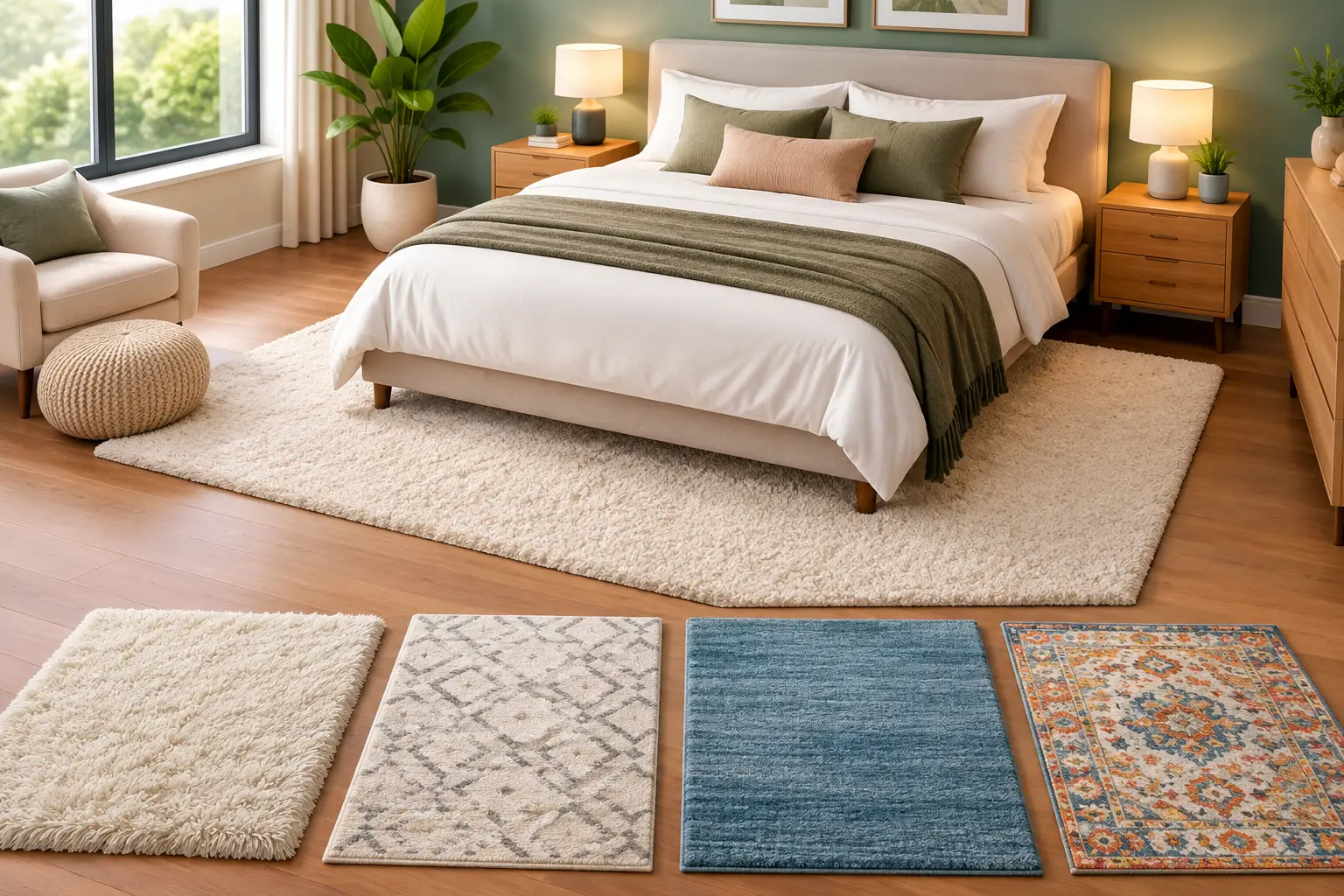
A bedroom rug has a simple job: make the first step out of bed warmer, softer, and more finished. The best rugs for bedrooms do that without swallowing the room, fighting the bed frame, or demanding more upkeep than your household can give. A good choice adds comfort where you feel it most and helps the entire sleep space look intentional.
For most shoppers, the right rug is not necessarily the most expensive one. It is the one that fits the room, works with daily traffic, and holds up to real life – including pets, kids, morning routines, and the occasional coffee cup near the nightstand. Start with size and placement, then narrow the material and pile height to match how you live.
Start With the Right Bedroom Rug Size
Size is the decision that changes everything. A rug that is too small can make even a well-furnished bedroom look disconnected. One that is too large can crowd doors, cover attractive flooring, and create a tripping edge in a tight layout.
In a primary bedroom, the rug should usually extend beyond both sides and the foot of the bed. This gives you a soft landing when you get up and creates a balanced frame around the room’s largest piece of furniture. A common setup places the front two-thirds of the bed and the bench, if you have one, on the rug. The rug should generally extend at least 18 to 24 inches past each side of the bed.
For a queen bed, an 8-by-10 rug is often the practical starting point. It gives enough side coverage in an average-size room without pushing too close to every wall. A 9-by-12 rug can be a better fit for a larger primary bedroom, especially when you want nightstands and a bench to sit comfortably within the rug’s footprint.
For a king bed, an 8-by-10 can work in a compact room, but a 9-by-12 is usually the better-looking and more comfortable option. The larger size preserves that important border of softness along both sides of the bed. If the room is narrow, two runners placed beside the bed can provide comfort without forcing in a large area rug.
In a smaller bedroom, especially a guest room, do not buy a rug simply because it sounds generous. A 5-by-8 rug placed across the lower third of a full or queen bed can add warmth while keeping the room open. Twin bedrooms work well with a 5-by-7 or 5-by-8 rug beside the bed, depending on the floor plan. Always measure around open doors, dresser clearance, and the walking route to the closet before checking out.
Three Placement Options That Work
The most common placement is under the lower two-thirds of the bed. It is clean, practical, and lets the rug show around the sides and foot. This is often the best value because you get the visual effect of a large rug without needing enough coverage to run under the entire bed.
A full under-bed placement works best in spacious rooms with a large rug and coordinated furniture. It creates a polished, grounded look, but it requires more square footage and usually a higher budget.
Side runners are the smart alternative for narrow bedrooms, platform beds, or rooms with beautiful flooring you do not want to hide. Use matching runners or choose one runner for the side of the bed you use most. You get the comfort benefit with less cost and less visual bulk.
Best Rugs for Bedrooms by Material
Bedroom rugs do not need to withstand the same mess and foot traffic as a kitchen or entryway rug. That opens the door to softer materials and higher piles. Still, a low-maintenance material matters if your bedroom is shared with children, pets, or a busy household.
Wool is a strong all-around option for comfort, insulation, and long-term wear. It feels warm underfoot and naturally resists soil better than many people expect. The trade-off is price. Wool rugs usually cost more upfront and may shed at first, especially when new. For shoppers who want a rug to keep for years, that added cost can make sense.
Synthetic rugs, including polyester and polypropylene, are usually the best choice when price and easy care come first. They are available in a wide range of colors, patterns, and textures, and many handle routine vacuuming and spot cleaning well. Polyester can have a soft, plush feel, while polypropylene is especially practical for stain resistance. Neither has the same natural feel or lifespan as quality wool, but both can deliver excellent value in a bedroom refresh.
Cotton rugs are lightweight, casual, and often budget-friendly. They work well in guest rooms, kids’ rooms, and relaxed spaces where you want an easygoing look. Their downside is that they can shift underfoot and may wear faster in high-use spots. Pairing one with a quality rug pad helps keep it in place.
Natural-fiber rugs made from jute or sisal add texture and a grounded, casual style. They can look great beneath a bed, but they are not the softest choice for bare feet. Consider them if visual texture matters more than plush comfort, or layer a softer smaller rug on top where you step out of bed.
Choose a Pile Height for Real Life
Pile height affects how a rug feels, cleans, and wears. Plush high-pile rugs bring immediate coziness to a bedroom. They are a natural fit for a low-traffic adult bedroom where comfort is the top priority. The trade-off is maintenance: thicker fibers can trap dust, pet hair, and small debris, and heavy furniture can leave impressions.
Low-pile rugs are easier to vacuum and tend to work better under doors, rolling storage, and bedroom furniture. They are a dependable option for households with pets, children, allergies, or a preference for simple upkeep. A low-pile rug can still feel inviting when paired with the right rug pad.
Medium pile often gives shoppers the best balance. It is soft enough for daily barefoot comfort but not so deep that cleaning becomes a chore. If you are furnishing a primary bedroom and want one straightforward answer, a medium-pile synthetic or wool-blend rug is hard to beat.
Match Color and Pattern to the Room You Have
A bedroom is a rest space, so the rug should support the mood instead of competing with every other element. Neutral rugs in beige, gray, cream, taupe, or soft blue are versatile choices because they work with changing bedding and wall colors. They also make it easier to update pillows, drapes, or a comforter without replacing the rug.
That said, neutral does not have to mean plain. A subtle geometric pattern, a faded traditional design, or a textured weave can add interest without making the room feel busy. Patterned rugs are especially useful under a bed because they hide everyday lint, pet hair, and minor marks better than a solid light color.
If your bedding already has bold prints or strong colors, choose a quieter rug. If the bed and walls are simple, the rug can provide the room’s main pattern. The goal is balance, not a perfectly matched set. Coordinate colors across the room, but let each piece have room to breathe.
Do Not Skip the Rug Pad
A rug pad is a small purchase that protects a larger one. It keeps the rug from sliding, adds a little cushioning, and reduces wear caused by friction against the floor. In bedrooms with hardwood, laminate, vinyl, or tile flooring, a pad also helps prevent the rug from bunching when you walk around the bed.
Choose a pad that is slightly smaller than the rug so it stays hidden. For a thicker rug, a thin non-slip pad is often enough. For a flatwoven or low-pile rug, a cushioned pad can make a noticeable difference in comfort. Check that the pad is safe for your flooring type, particularly if you have finished wood floors.
Make Comfort Fit the Budget
It is easy to focus on the rug’s price tag and overlook the cost of choosing the wrong size or material. Buying a too-small rug, then replacing it later, is rarely the value move. Measure first, decide where you need softness most, and choose the material that fits your maintenance routine.
For a practical bedroom upgrade, put your budget toward proper sizing and a dependable rug pad before paying extra for a complicated pattern or trend-driven color. A well-sized, easy-care rug makes the room more comfortable every morning and gives your bed, mattress, and bedding a more finished setting.
Whether you are updating one guest room or furnishing a complete sleep space, 4 The Abode makes it easier to pair everyday bedroom comfort with value-focused essentials. Choose a rug that feels good underfoot, fits the room you actually have, and leaves more room in the budget for a better night’s rest.

Leave a Reply