
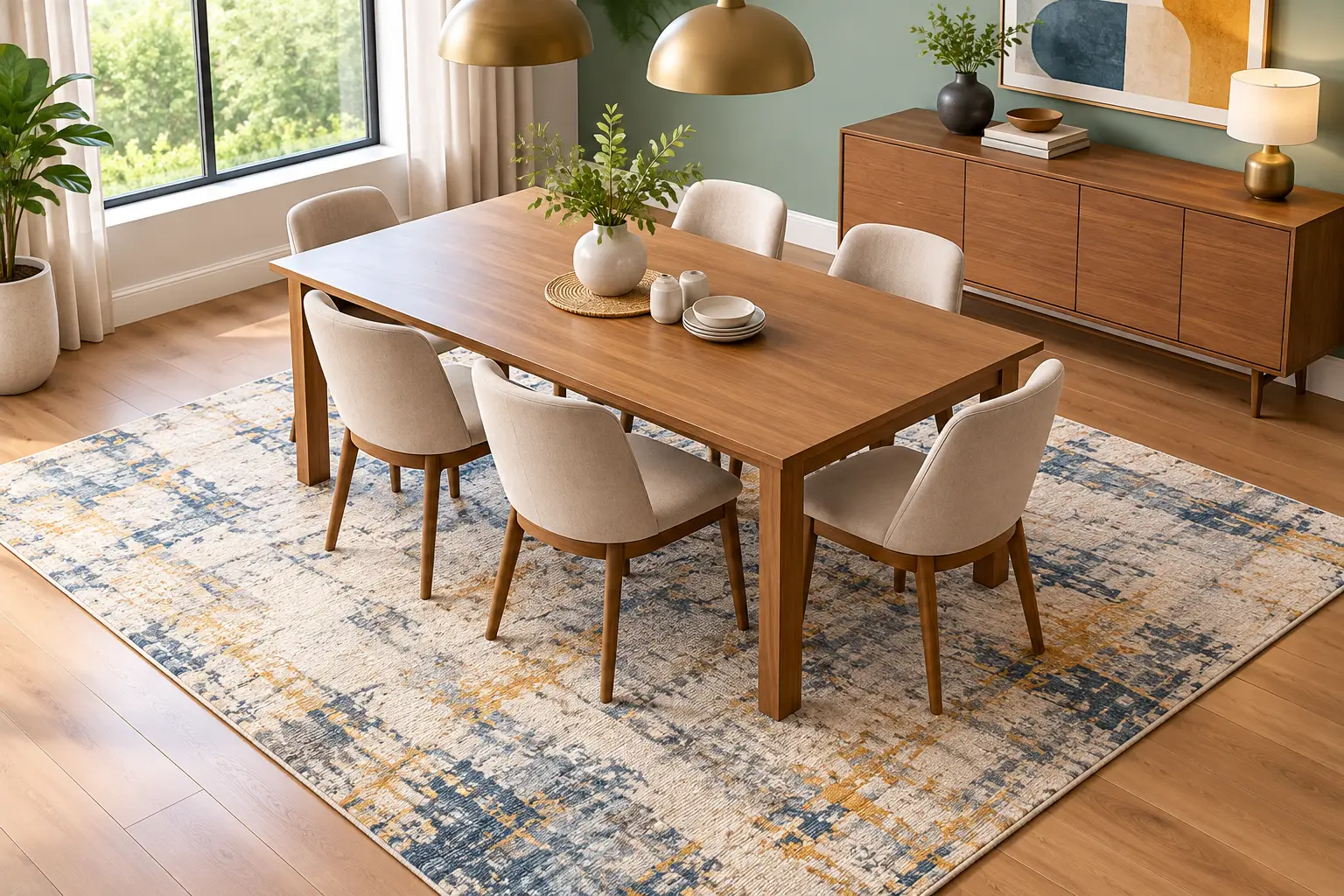
A dining room rug has one tough job: it needs to look finished under the table while standing up to sliding chairs, dropped food, busy family meals, and the occasional spilled drink. The best rugs for dining rooms are not always the softest or the most expensive. They are the ones sized correctly for your table, made from practical materials, and easy enough to maintain that you will not regret using the room.
For value-focused households, start with how you actually eat at home. A formal room used a few times a year can handle more delicate fibers. A dining space that doubles as homework headquarters, game night central, or the everyday dinner table needs a lower-maintenance option that earns its place.
Best Rugs for Dining Rooms Start With the Right Size
The most common dining rug mistake is buying one that fits the table but not the chairs. When guests pull their chairs back, all four chair legs should remain on the rug. If the back legs catch on the edge, the rug feels too small and can bunch, curl, or become a trip hazard.
A practical rule is to choose a rug that extends at least 24 inches beyond every side of the table. If you have roomy chairs, a large dining room, or people who tend to push back farther from the table, 30 inches is even better. Measure from the outer edge of the tabletop, then add that clearance on each side before shopping.
Here is what that usually looks like in real rooms:
- A 5-by-7-foot rug can work under a small round table or a compact two-to-four-seat setup.
- An 8-by-10-foot rug is a reliable choice for many six-seat rectangular tables.
- A 9-by-12-foot rug often works best for a larger eight-seat table or an open dining area.
- A 10-by-14-foot rug gives a substantial table and larger chairs the clearance they need.
These are starting points, not fixed rules. Table leaves matter. If you regularly extend your table for holidays or family visits, size the rug for the table at its largest normal setup. It is better to have a little extra floor coverage than to have chair legs falling off the edge every time you host.
Match the Rug Shape to the Table
A round rug under a round table creates a clean, balanced look, especially in a breakfast nook or smaller dining area. A rectangular rug is usually the easiest choice for rectangular and oval tables. Square rugs can work under square tables, but they need enough room around all sides to avoid looking crowded.
Do not feel locked into matching shapes perfectly. A round rug beneath a square table can soften a room with many hard lines. The key is still chair clearance. Shape affects appearance, but size affects daily comfort.
Choose a Material Built for Chairs and Spills
Dining rooms are high-contact spaces. Chair legs drag across the surface, crumbs settle into fibers, and spills happen when you least expect them. That makes pile height and fiber choice more important than a plush feel under bare feet.
Low-Pile Synthetic Rugs Offer the Easiest Care
For most active households, polypropylene, polyester, and other performance synthetic rugs are smart buys. They are generally stain resistant, affordable, and available in a wide range of colors and patterns. A low-pile synthetic rug allows chairs to slide more easily and does not trap as much food or pet hair as a thicker rug.
Polypropylene is especially practical for dining areas because it resists moisture and handles routine spot cleaning well. The trade-off is that it may not have the natural texture or premium feel of wool. Still, when the priority is everyday durability at a reasonable price, this is often the category to beat.
Indoor-Outdoor Rugs Work Well Indoors, Too
Indoor-outdoor rugs are not limited to patios. Their durable construction and easy-clean surfaces make them a strong choice beneath a dining table, particularly for homes with children, pets, or frequent entertaining. Many newer designs look far more polished than the basic outdoor rugs people remember.
They can feel firmer underfoot than traditional indoor rugs, and the texture may be less cozy. In a dining room, that is often an acceptable trade-off. This is a workspace as much as a gathering space, and easy cleanup has real value.
Washable Rugs Make Sense for Busy Homes
A washable rug can be a practical answer for smaller dining spaces, apartments, breakfast nooks, and homes where spills are common. Check the manufacturer’s care instructions before buying. A large 9-by-12-foot rug may be technically washable but still too heavy for a standard home washer.
For larger sizes, look for washable covers, machine-friendly smaller rugs, or materials that can be spot cleaned without stress. Convenience should fit your actual laundry setup, not just the product label.
Wool Is Durable, With More Care Required
Wool rugs bring natural texture, warmth, and long-term appeal. Quality wool can be surprisingly durable, but it is not automatically the best choice for every dining room. It may shed when new, absorb spills if they are not handled quickly, and cost more upfront than synthetic alternatives.
Choose wool when you want a more elevated look and can commit to prompt spill treatment and occasional professional cleaning. In a formal dining room, it can be worth the added care. In an everyday eat-in kitchen, a washable or synthetic rug may be the better value.
Pick Colors and Patterns That Hide Everyday Evidence
A solid cream rug may look sharp in a product photo, but a dining room asks more from it than a low-traffic bedroom does. Mid-tone colors, subtle patterns, and heathered designs are more forgiving of crumbs, small stains, and regular chair movement.
Look for combinations such as charcoal and ivory, denim blue and beige, warm gray and tan, rust and navy, or muted multi-color patterns. These options add depth without forcing you to vacuum after every meal. If your dining chairs are patterned or your wallpaper is bold, a quieter rug can keep the room from feeling overly busy.
Pattern scale matters, too. A small, tightly repeated pattern can disguise minor messes well, while a large graphic print makes more of a style statement. Neither is wrong. For a practical household, the better choice is usually the one that does not show every crumb between cleanings.
Use a Rug Pad for Better Performance
A rug pad is a small upgrade with a big payoff. It helps prevent slipping, reduces shifting under moving chairs, and adds a little cushioning between the rug and hard flooring. It can also help the rug wear more evenly over time.
Choose a thin, non-slip pad rather than a thick cushioned one for most dining rooms. Thick pads can make chairs wobble or create an awkward raised edge. Measure the pad slightly smaller than the rug so it stays hidden and does not peek out around the sides.
If you have luxury vinyl plank, finished hardwood, or another sensitive floor, confirm that the pad is labeled safe for that surface. Some materials can discolor certain finishes over time, which is an avoidable problem.
Consider Your Chair Style Before You Buy
The same rug can perform very differently under different chairs. Narrow metal legs, wood legs, upholstered chairs, and rolling dining chairs each create their own wear pattern. Chairs with sharp or narrow legs can catch loops in a high-pile or loosely woven rug. A tightly woven flatweave or low-pile option is safer.
If your chairs are heavy, test how easily they move across a sample or similar rug texture when possible. You do not want every meal to begin with guests struggling to pull out a chair. On the other hand, a rug that is too slick can slide without a quality pad underneath it.
Keep Dining Room Rug Care Simple
The right care routine extends the life of any rug. Vacuum regularly, but use the appropriate setting for the pile and construction. Flatweaves and low-pile rugs may need a gentler setting to avoid pulling at edges or fringe. Rotate the rug several times a year so chair traffic and sunlight do not wear one section more than another.
When a spill happens, blot it quickly with a clean, absorbent cloth. Do not scrub aggressively, which can spread the stain or work it deeper into the fibers. Use a cleaner suited to the rug material, test it in a hidden area first, and follow the rug’s care label. For larger spills, professional cleaning can be less expensive than replacing a rug that was treated the wrong way.
A dining rug should make the room more usable, not give you another household item to worry about. Measure for chair clearance, choose a low-maintenance material, and select a color that fits real meals instead of showroom perfection. At 4 The Abode, practical home choices should deliver comfort, durability, and a price that leaves room in the budget for the rest of your home.

Leave a Reply