
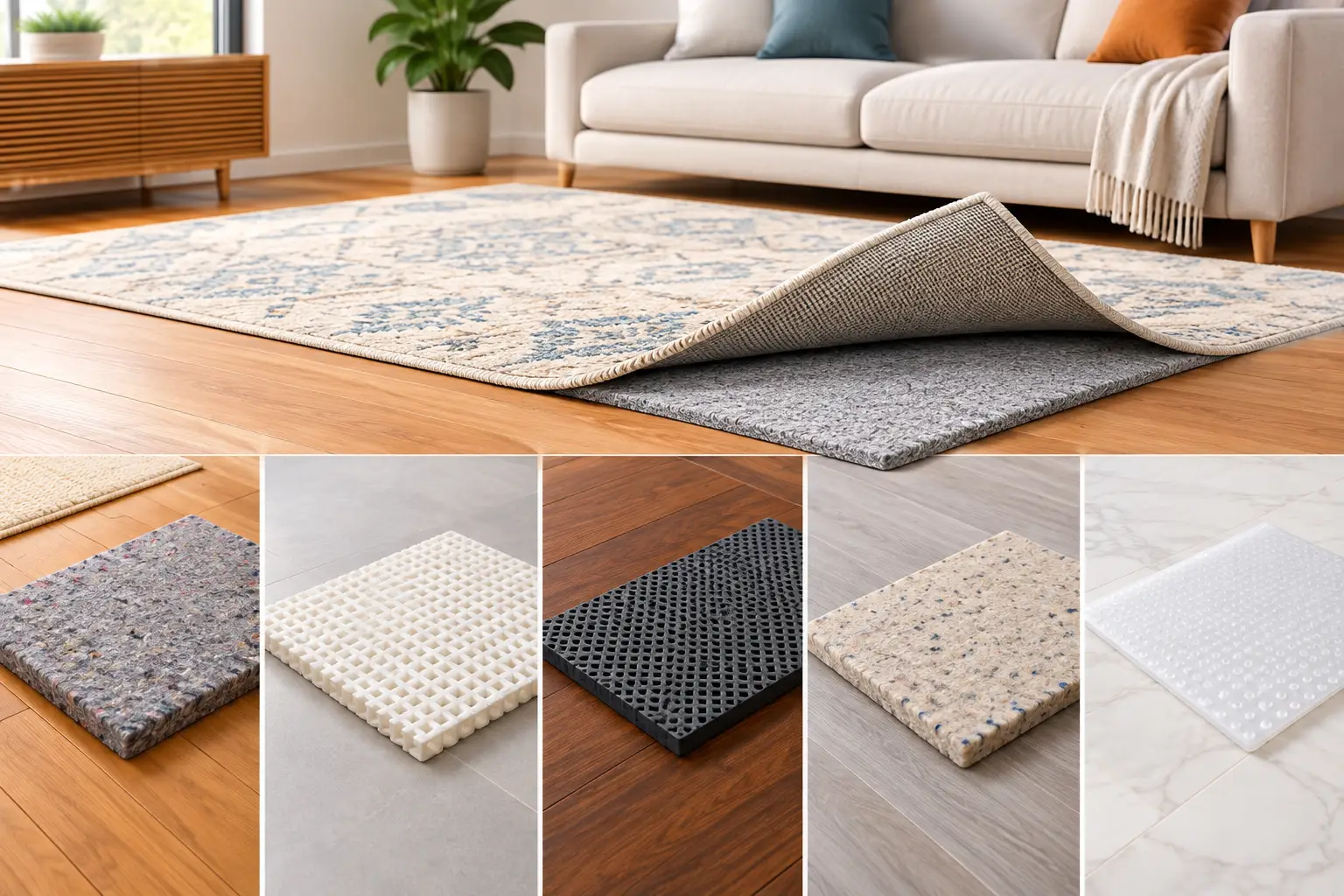
A rug that slides at the hallway turn, bunches under a dining chair, or feels thin beneath your feet is usually missing one practical layer: the right rug pad. This guide to choosing rug pads cuts through the options so you can protect your floors, improve comfort, and get more life from the rug you already own.
A rug pad is not just an add-on. It helps hold an area rug in place, reduces wear from foot traffic, cushions hard flooring, and can keep furniture from causing the rug to creep or wrinkle. The best choice depends on your floor type, the rug’s construction, the room’s activity level, and whether you want extra softness or a low-profile fit.
Start With Your Floor Type
Your flooring should lead the decision. A pad that works well on tile may not be a safe choice for luxury vinyl plank, while a thick felt pad that feels great in a bedroom may be too bulky under a door.
For hardwood floors, engineered wood, laminate, and many vinyl floors, choose a pad clearly labeled as safe for hard surfaces. Avoid pads made with adhesives, plasticizers, or low-quality PVC that can discolor finishes or leave residue behind. Natural rubber and felt-rubber combinations are common choices because they offer grip without relying on sticky backing.
Tile, stone, and concrete floors typically need both traction and cushioning. A rubber-backed felt pad often works well in living rooms and dining spaces because it holds the rug steady while giving it a fuller feel. If the room stays damp, such as an entryway near a wet-weather door, select a pad designed for moisture resistance and allow the floor underneath to dry fully when cleaning.
Wall-to-wall carpet calls for a different solution. A rug can move on top of carpet even when it seems secure at first. Look for a rug-to-carpet pad or a low-profile non-slip option made specifically for that purpose. Do not assume a hard-floor pad will work on carpet. It may bunch, shift, or add unnecessary bulk.
Guide to Choosing Rug Pads by Material
Most rug pads fall into three practical categories: rubber, felt, and felt with rubber backing. Each has a job to do, and the lowest price is not always the best value if it does not match the room.
Rubber pads for grip
Thin rubber pads are built primarily to stop movement. They are a smart fit for runners in hallways, small rugs near doors, and flatwoven rugs that do not need much added cushion. They also work well when clearance is tight under an exterior door, closet door, or cabinet.
The trade-off is comfort. A thin grip pad will not make a lightweight rug feel plush, and low-grade open-weave options can break down over time. For high-traffic areas, a denser rubber pad generally offers more reliable hold than a very thin mesh-style pad.
Felt pads for comfort and support
Felt pads add weight, insulation, and cushioning. They are especially useful beneath larger rugs in bedrooms, living rooms, and home offices, where you want the rug to feel more substantial underfoot. A quality felt pad can also help reduce noise from footsteps and make a thinner rug feel less flat on a hard floor.
Pure felt does not always provide enough grip on smooth surfaces. It is better suited to rugs anchored by furniture, such as a large living room rug under a sofa and coffee table, or it should be paired with a non-slip layer. If your rug sits in an open area and receives heavy foot traffic, felt alone may not keep it from moving.
Felt-and-rubber pads for most hard floors
A felt-and-rubber pad gives you the benefits most households need: cushioning from the felt and traction from the rubber side. It is a dependable all-around option for hardwood, laminate, tile, and stone floors when the product is approved for your specific surface.
This type is often worth the extra cost for larger rugs and rooms used every day. It can help a rug lie flatter, soften the feel of hard flooring, and limit shifting when people walk across it. For a value-focused purchase, buying the right pad once is usually less expensive than replacing a damaged rug or refinishing a marked floor later.
Choose the Right Thickness for the Room
Thicker is not automatically better. Thickness changes the feel of the rug, but it also affects door clearance, furniture stability, and how easily people can walk across the edge.
A thin pad, usually around 1/16 to 1/8 inch, is best for entryways, hall runners, kitchens, and any spot where a door needs to swing freely. It provides grip with minimal height. This is also a practical choice under low-profile rugs where you want the rug to stay flat rather than feel padded.
A medium pad, often around 1/4 inch, suits many living rooms, dining rooms, and bedrooms. It adds noticeable comfort without creating too much lift. For most area rugs on hard flooring, this is the balance point between support, safety, and price.
Thicker pads, around 3/8 inch or more, make sense in bedrooms, reading spaces, and low-traffic areas where comfort is the priority. They can make a simple rug feel softer and warmer, especially beside a bed. Skip extra-thick pads under dining tables or desks with rolling chairs. Chairs may wobble, catch at the rug edge, or become harder to move.
Get the Size Right Before You Buy
A rug pad should usually be slightly smaller than the rug itself. The standard approach is to choose a pad about one to two inches shorter on every side. That leaves a border of rug around the pad, helping the edges taper naturally to the floor instead of looking raised.
For example, an 8-by-10-foot rug generally needs a pad closer to 7 feet 10 inches by 9 feet 10 inches. Some pads are sold in common rug sizes and can be trimmed with household scissors for a more exact fit. Measure the rug itself, not just the area you intended to cover. Handmade rugs and casual woven rugs can vary slightly from listed dimensions.
Do not let the pad extend beyond the rug. Exposed pad edges collect dust, look unfinished, and can create a trip hazard. A pad that is too small is also a problem because the unsupported rug edges may curl or wear faster.
Match the Pad to How the Room Is Used
A quiet bedroom and a busy front entry do not need the same pad. Think about what happens in the space every day.
In an entryway, prioritize a thin, non-slip pad that keeps the rug flat and stable. In a kitchen, choose easy-clean materials and check that the rug itself is washable or suited for spills. For a family room, a denser felt-and-rubber pad can handle regular foot traffic while adding comfort for movie nights and playtime.
Dining rooms need a pad that supports the rug without making chairs unsteady. A thinner felt-rubber pad is often the practical answer. In bedrooms, especially where the rug extends beyond the sides of the bed, a thicker felt option can make the first step of the morning more comfortable.
If you have pets, children, or older adults at home, rug stability matters even more. A pad cannot fix a curled rug corner or a rug that is too small for the space, but it can greatly reduce sliding and bunching when properly sized and placed.
Check the Rug and Pad Together
Before placing furniture back on the rug, lay the pad flat and center the rug over it. Smooth the rug from the middle outward so there are no ripples. Let it settle for a day, especially if the rug arrived rolled or folded.
Check the edges after installation. Walk across the rug from several directions and test whether corners lift or the surface shifts. If the rug is under a dining table, pull a chair out and push it back in. If it is in front of a door, open the door fully. These quick checks can prevent an inconvenient return or a daily annoyance.
A good rug pad works quietly in the background. Choose one that fits your floor, supports the way you use the room, and stays within your budget. When you are refreshing a bedroom or finishing a whole-room update, 4 The Abode makes it easier to build comfort from the floor up without paying luxury-store prices.

Leave a Reply