
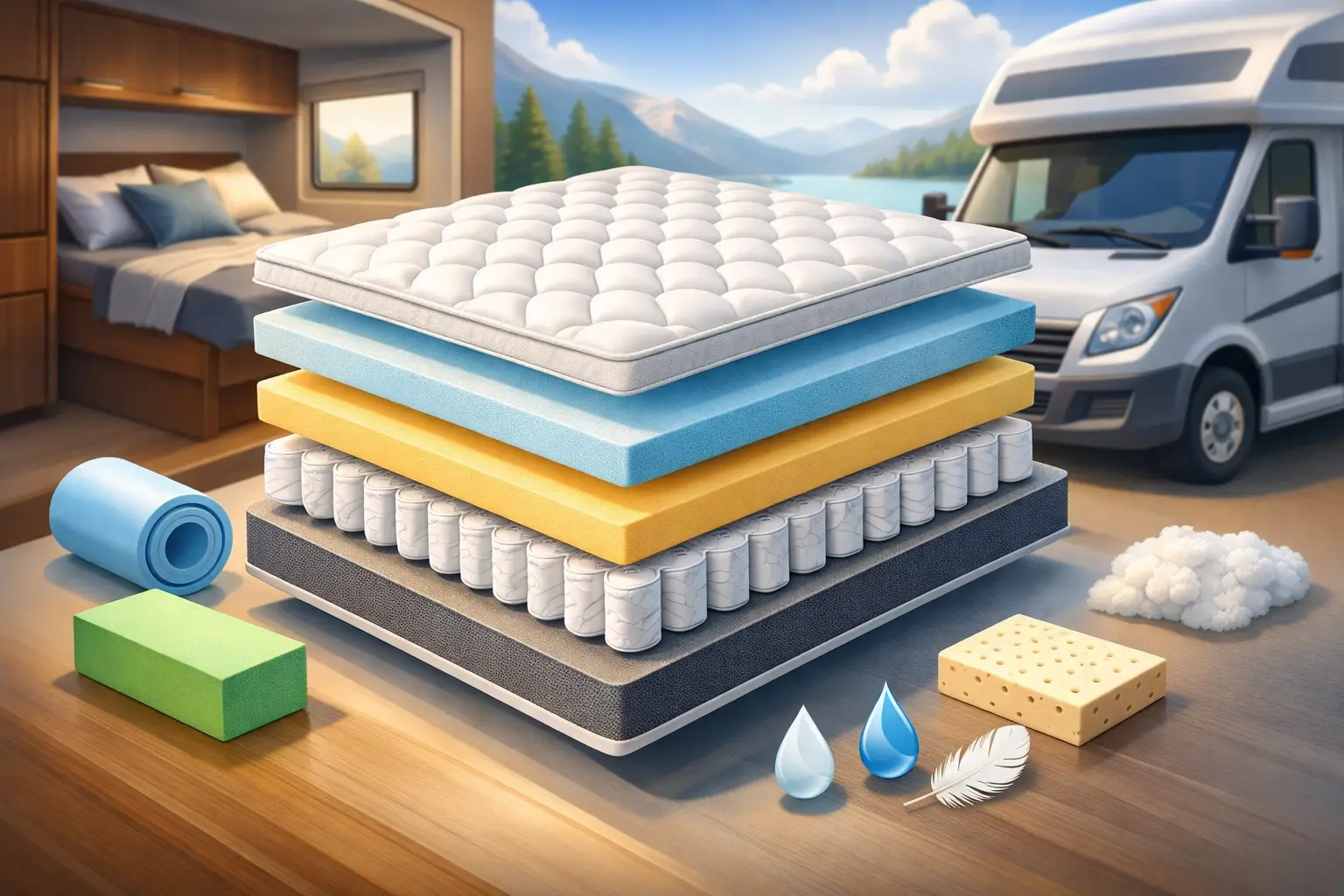
A bad RV mattress shows up fast. One weekend trip is usually enough to tell you if the bed sleeps hot, sags at the edges, or leaves your back sore before breakfast. That is why rv mattress materials explained in plain English matters – the material inside the mattress affects comfort, weight, durability, temperature, and price more than most shoppers realize.
Unlike a standard bedroom setup, an RV has tighter dimensions, lighter weight limits, and more day-to-day movement. The mattress has to perform in a smaller space and often on a platform, bunk, or corner cut layout that leaves less room for error. If you are replacing an original RV mattress, the right material can make a bigger difference than just buying a thicker bed.
RV mattress materials explained by what they actually do
Most RV mattresses fall into four material categories: memory foam, polyurethane foam, latex, and innerspring or hybrid construction. Each one handles pressure relief, motion, airflow, and longevity differently. None is perfect for every sleeper, which is why the best choice usually comes down to how you travel, how often you sleep in the RV, and what kind of feel you want at the end of the day.
A couple traveling full-time may want stronger edge support and better durability. A family outfitting bunk mattresses may care more about price and lighter weight. If the RV is used a few weekends a year, paying for premium natural materials may not make sense. If it is your second home, it probably does.
Memory foam
Memory foam is one of the most common choices for RV mattresses because it compresses well, relieves pressure, and works nicely in odd RV sizes. It contours around shoulders, hips, and lower back, which can help side sleepers and anyone dealing with joint pain. It also absorbs motion, so if your partner shifts around at night, you are less likely to feel it.
The trade-off is heat and response time. Traditional memory foam tends to sleep warmer than more breathable materials, and some people dislike the slower sinking feel. In an RV, where airflow may already be limited, that can matter. Gel-infused and open-cell versions help, but they do not turn memory foam into a cool-sleeping miracle.
Memory foam is often a strong value play because it delivers a more cushioned feel without pushing the price too high. For many RV owners, it is a practical middle ground between comfort and cost.
Polyurethane foam
Polyurethane foam, often called polyfoam, is widely used in budget-friendly RV mattresses. It is lightweight, generally affordable, and available in a wide range of firmness levels. In some mattresses, it serves as the full core. In others, it works as a support layer under memory foam or quilted covers.
This material can be a smart choice when price and reduced weight matter most. That is especially true for kids’ bunks, guest RVs, or occasional travel setups. The issue is quality varies a lot. Lower-density polyfoam can break down faster, develop body impressions, and lose support sooner than better materials.
If you are looking at a foam RV mattress, it is worth paying attention to whether the foam is simply cheap or actually built to hold up. Two mattresses can look similar online and feel very different after a season of use.
Latex
Latex is known for a more responsive feel than memory foam. Instead of slowly hugging the body, it has a buoyant, supportive pushback that many sleepers find easier to move on. It also tends to sleep cooler, last longer, and resist sagging better than lower-grade foam.
For RV use, latex has clear advantages if you want durability and temperature control. It is especially appealing for people who sleep hot or dislike the stuck-in-the-bed sensation of memory foam. It also handles repeated use well, which matters for full-timers and frequent travelers.
The downside is usually price and weight. Latex mattresses often cost more, and the material is heavier than many all-foam alternatives. In some RVs, that added weight may be a factor. If your main goal is the lowest upfront cost, latex may not be the best fit. If your goal is longer-term value, it can be worth it.
Innerspring and hybrid mattresses
Traditional innerspring mattresses use steel coils for support with thinner comfort layers on top. Hybrid mattresses combine a coil base with foam or latex comfort layers. In the RV world, hybrids are often chosen by shoppers who want more familiar support, stronger edges, and better airflow than many all-foam beds provide.
Coils can help the mattress feel more stable and less sinky. That is useful if you share the bed, sit on the edge often, or simply prefer a more lifted sleeping surface. Hybrids also tend to breathe better than dense foam mattresses because air moves through the coil system.
The trade-offs are weight, height, and motion transfer. Some innerspring or hybrid models may be too tall for tight RV clearances, and they can weigh more than foam mattresses. A traditional innerspring can also pass more motion from one sleeper to the other. A well-built hybrid usually improves that, but construction matters.
How RV mattress materials affect comfort and value
When shoppers compare mattresses, they often focus on firmness first. That matters, but material tells you more about how the bed will perform over time. A soft latex mattress and a soft memory foam mattress will not feel the same. A firm polyfoam mattress may be supportive at first but wear out faster than a better-built hybrid.
Pressure relief is where memory foam usually stands out. Breathability is where latex and coils often have the edge. Budget shoppers often land on polyfoam, while long-term users may get better value from latex or a quality hybrid. The point is not finding a universally best material. It is matching the material to the way the RV is actually used.
For weekend campers, a simple foam mattress may be enough. For longer road trips, heat buildup and support issues become more obvious. If you wake up stiff at home, that problem usually gets worse on a thin RV mattress made with low-grade foam.
RV mattress materials explained for different sleeper types
Side sleepers often do well with memory foam or softer hybrids because these materials cushion pressure points better. Back sleepers usually need a balanced feel that keeps the lower back supported without feeling hard, which can be found in firmer foam, latex, or hybrid models. Stomach sleepers typically need a flatter, firmer surface to avoid too much sink through the midsection.
Hot sleepers should usually look harder at latex or hybrid construction. Couples may appreciate memory foam for motion control, but they may also want the stronger edges of a hybrid. Kids’ bunks and occasional-use RVs often make more sense with affordable foam options, provided the build quality is decent.
Body weight also changes how materials perform. Heavier sleepers tend to compress foam faster and may prefer denser foam, latex, or hybrid support systems. Lighter sleepers often get enough support from foam mattresses that would feel too soft or too thin for someone heavier.
What to watch before you buy
In an RV, the mattress material is only part of the story. Thickness, flexibility, and shape matter too. Some RV mattresses need rounded corners, short queen sizing, or custom dimensions. A great material choice in the wrong size is still the wrong mattress.
You also want to think about access. A heavier latex or hybrid mattress may be harder to maneuver through tight RV doors or around corner layouts. If the bed platform lifts for storage, mattress weight becomes even more important. Foam mattresses are often easier to handle, which is one reason they remain so popular in RV setups.
Covers and protectors also play a practical role. A breathable cover can help with airflow, while a good protector helps guard against spills, moisture, and wear. In an RV, where humidity and temperature swings can be harder to control, that extra layer of protection is money well spent.
At 4 The Abode, the focus is simple: practical comfort, dependable quality, and strong value without inflated pricing. That matters when you are buying for a space that needs to work hard every night and fit right the first time.
The best RV mattress material is rarely the one with the biggest marketing claim. It is the one that matches how you sleep, how often you travel, and how long you expect the mattress to last. If you start there, the choice gets a lot easier – and your next trip gets a lot more comfortable.

Leave a Reply