
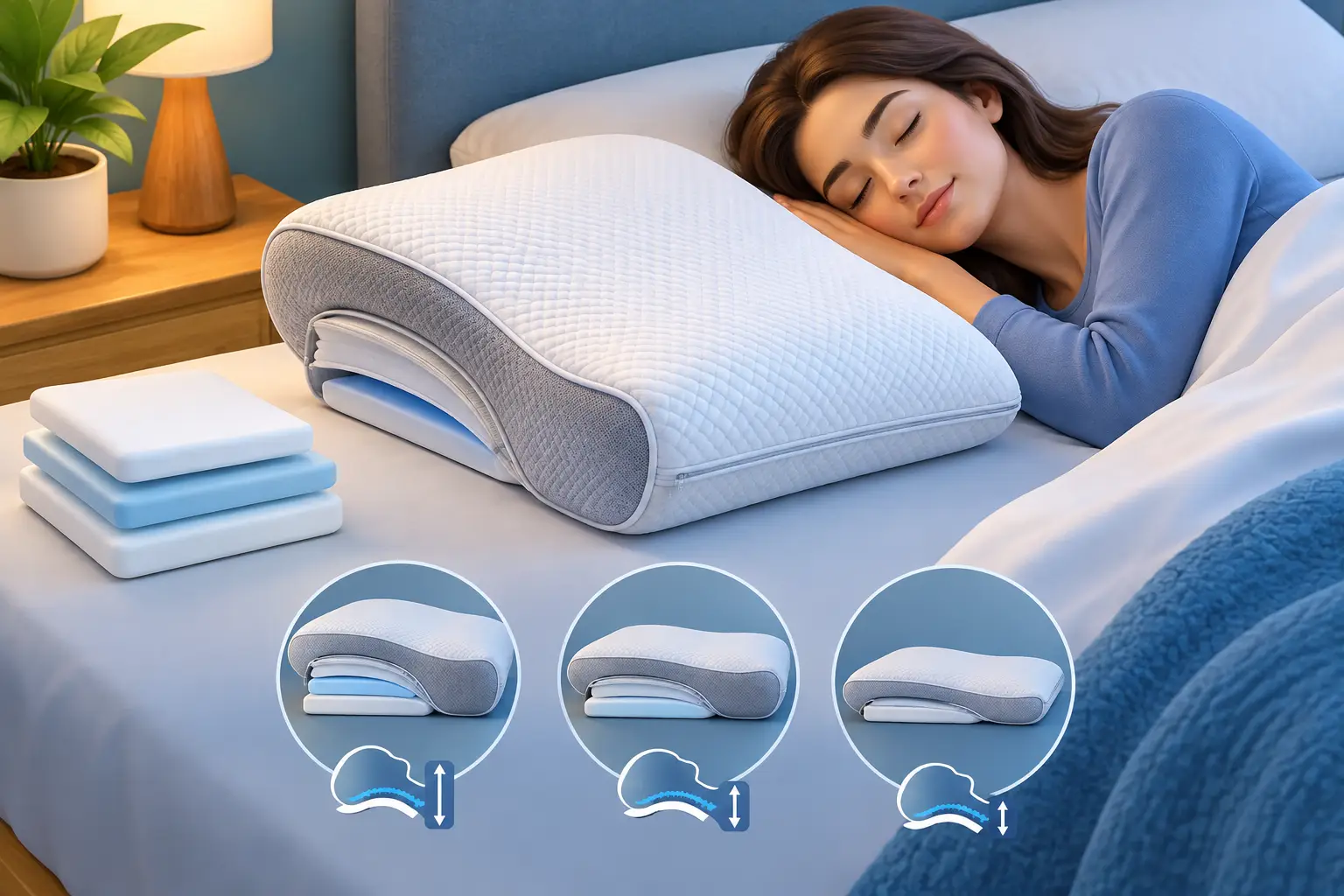
A pillow that starts out comfortable but leaves your neck sore by morning is not a bargain, no matter how low the price looks. This adjustable pillow review focuses on what practical shoppers need to know before buying: whether adjustable fill really improves comfort, which sleepers benefit most, and how to get lasting support without overspending.
What Is an Adjustable Pillow?
An adjustable pillow lets you change its height and firmness by adding or removing fill. Most use shredded memory foam, fiber fill, down alternative, latex pieces, or a blend of materials inside a zippered cover. Instead of accepting one fixed loft, you set the amount of material that supports your head and neck.
That makes adjustable pillows a sensible option for households with different sleep preferences. A side sleeper may need a higher, firmer pillow, while a stomach sleeper often needs much less loft. With a traditional pillow, finding the right fit can mean buying and returning several options. With an adjustable design, you can make small changes at home until the pillow feels right.
The trade-off is simple: it takes a little setup. Adjustable fill does not automatically create perfect support the moment you open the box. You need to test the pillow, remove or redistribute material, and give your body a few nights to respond.
Adjustable Pillow Review: Who Gets the Most Value?
Adjustable pillows are not just for shoppers who want a softer or firmer feel. They are most useful when your sleep position, body frame, or mattress firmness makes standard pillows feel inconsistent.
Side sleepers
Side sleepers usually need enough loft to fill the space between the shoulder and head. If the pillow is too flat, the neck bends downward. If it is too tall, the neck angles upward. An adjustable pillow gives you room to build the height you need, especially if you have broad shoulders or sleep on a firm mattress that does not allow much sink.
For side sleeping, shredded foam or latex fill tends to provide the most stable support. Down alternative can work, but it may compress more quickly and require frequent fluffing.
Back sleepers
Back sleepers generally need medium loft and steady neck support. The goal is to keep the head from tipping too far forward while avoiding the raised, crowded feeling of an overfilled pillow. Adjustable pillows work well here because you can remove a modest amount of fill rather than settling for an overly thick standard pillow.
Look for a pillow that holds its shape through the night but still allows you to create a gentle cradle for your head. A very dense foam fill can feel too firm for some back sleepers, so the cover fabric and overall fill blend matter.
Stomach sleepers
Stomach sleepers usually need the lowest loft of all. A thick pillow can strain the neck because the head is already turned to one side. An adjustable pillow can be a good choice only if enough fill can be removed to make it genuinely low and flexible.
If you sleep mostly on your stomach, avoid buying a high-loft adjustable pillow just because it is advertised as versatile. Check that the insert can be reduced significantly. A thin pillow or no pillow under the head may still be more comfortable for some stomach sleepers.
Combination sleepers and couples
Combination sleepers often change positions during the night, which makes one fixed pillow height hard to manage. Adjustable fill allows a middle-ground setup: enough support for side sleeping without feeling too tall on your back.
It is also a practical choice for couples. Two people can buy the same pillow style and adjust each one differently. That makes shopping easier when you want coordinated bedding without forcing both sleepers into the same feel.
What to Check Before You Buy
The word “adjustable” does not mean every pillow performs the same way. Fill type, cover construction, temperature control, and return terms will affect whether the pillow is worth the price.
Fill material and support
Shredded memory foam is common because it provides contouring support and holds loft well. It can feel firmer and heavier than fiber fill, and some foam pillows need time to air out after delivery. Choose this option if you want shape retention and more substantial neck support.
Down alternative and polyester fiber fill feel lighter and more familiar to shoppers who prefer a traditional pillow. They can be easier to reshape, but they may flatten faster and need more regular fluffing. Latex fill is springier and often cooler than dense memory foam, although it may cost more.
A blended fill can offer a useful middle ground. The right choice depends on whether you prioritize a plush feel, firm support, or cooler sleep.
Loft range
A pillow should have enough removable fill to make a meaningful difference. If you remove only a handful of material and the pillow remains very high, it is not truly flexible for lower-loft sleepers. Likewise, a pillow that arrives underfilled may not provide enough material for side sleepers.
Keep the extra fill in a clean, dry bag. Do not throw it away after the first adjustment. Your needs may change when you switch mattresses, recover from an injury, change sleep positions, or move the pillow to a guest room.
Cover and temperature
A breathable, washable cover adds real value. Cotton, bamboo-derived rayon blends, and moisture-wicking fabrics can make the surface feel cooler and easier to maintain. A removable cover is especially helpful for households managing allergies, pets, children, or frequent guest use.
Cooling claims deserve a practical view. A breathable cover may reduce surface heat, but a pillow packed tightly with memory foam can still sleep warm. If you tend to overheat, avoid overstuffing the pillow and use a pillow protector that does not trap heat.
Size and bed setup
Standard, queen, and king pillow sizes refer mostly to width, not always to support level. A larger pillow does not automatically offer more loft. Choose the size that fits your bed, pillowcases, and sleeping habits, then focus on the adjustable fill for comfort.
For RV owners, a standard-size adjustable pillow is often the most practical pick. It fits more easily in compact sleeping areas and can be adjusted for different mattress surfaces, including the firmer feel common in RV mattresses.
How to Adjust It Without Guesswork
Start by sleeping on the pillow as delivered for one or two nights, unless it is obviously too high. Then make small adjustments instead of removing large amounts at once. Take out a handful of fill, zip the cover closed, redistribute the remaining material, and test it again.
Pay attention to how you feel when you wake up. Neck stiffness, shoulder pressure, headaches, and frequent repositioning can point to a loft problem. If your neck feels bent upward, remove fill. If your shoulder feels compressed or your head drops toward the mattress, add fill back in.
Do not judge the pillow only while sitting up in bed. Your alignment changes once you are lying down on your actual mattress. A pillow that feels plush in your hands can still be too tall or too flat for your body.
Is an Adjustable Pillow Worth the Price?
For many shoppers, yes. The value comes from flexibility and usable life, not from a flashy label. One pillow that can be adjusted as your preferences change may be a better buy than repeatedly replacing low-cost pillows that flatten or never fit correctly.
Still, adjustable pillows are not automatically the best choice for everyone. If you already know you prefer an ultra-soft, low-loft pillow, a simple traditional option may be more comfortable and cost less. If you dislike handling loose fill or want a ready-to-use pillow with no trial period, fixed loft may be the better fit.
The best purchase balances comfort with the rest of your sleep setup. A supportive pillow works better when paired with a mattress that suits your body, breathable sheets, and a clean pillow protector. At 4 The Abode, practical sleep shopping means looking for the comfort features you will use, dependable quality, and a price that makes sense for your home.
Before making your final choice, measure your needs instead of shopping by packaging alone. Consider your primary sleep position, shoulder width, mattress firmness, and whether you sleep warm. A few careful adjustments can turn an ordinary bedtime upgrade into support you notice every morning.

Leave a Reply