
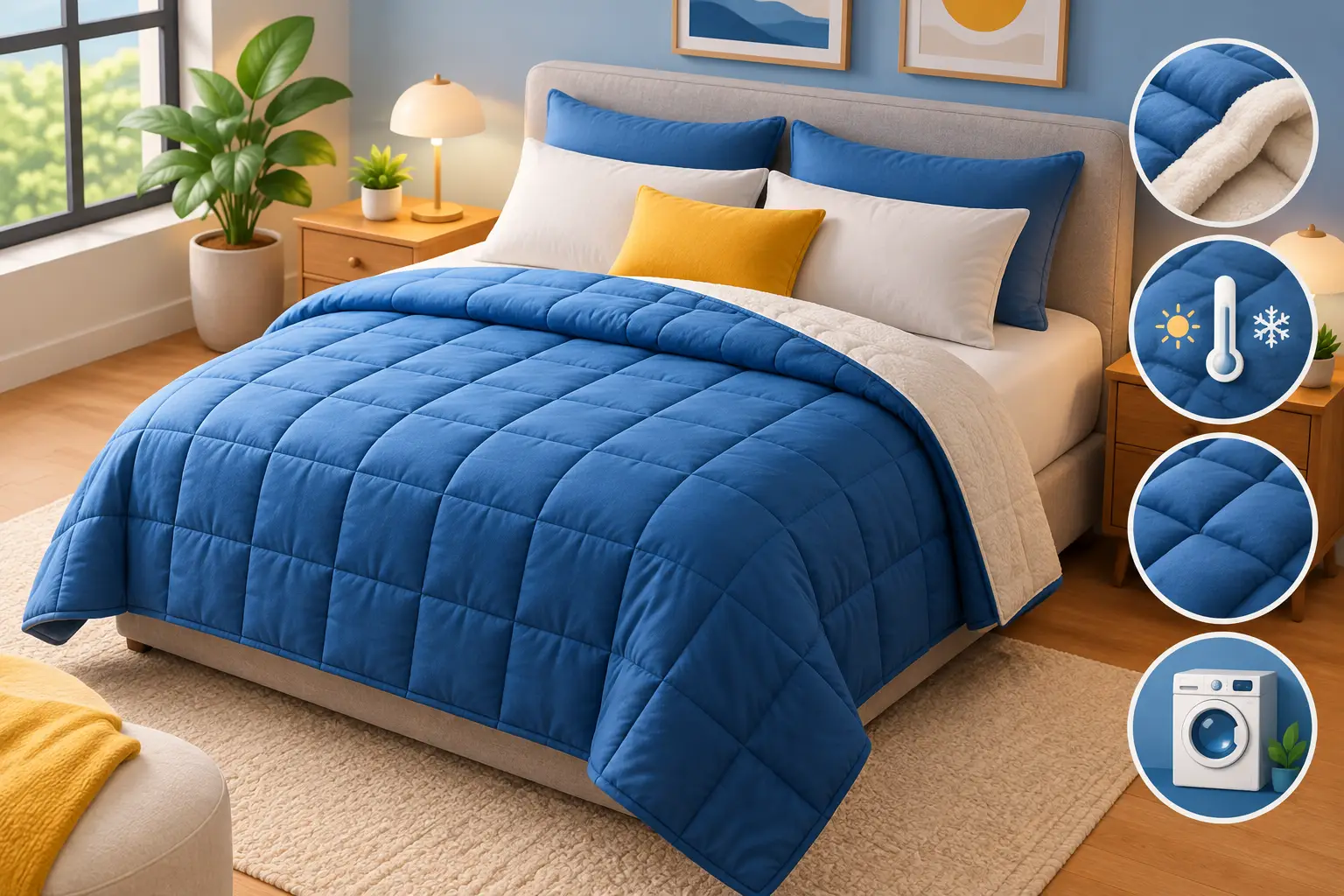
A good quilt does more than cover the bed. Quilts add a finished layer to your bedroom, provide useful warmth when the temperature drops, and make it easier to refresh your space without replacing every piece of bedding. For practical shoppers, the right choice comes down to size, weight, fabric, care needs, and how the quilt will work with the mattress, sheets, and pillows you already own.
A quilt should earn its spot on the bed. It needs to look good, feel comfortable, hold up to regular use, and fit your budget. That means skipping guesswork and choosing for the way you actually sleep.
Why Quilts Make Sense for Everyday Beds
Quilts are a practical middle ground between a lightweight blanket and a bulky comforter. They typically have a stitched top layer, a thin layer of batting, and a backing fabric. That construction provides warmth without the heavy, puffed-up feel some sleepers do not want.
For many homes, a quilt works especially well in spring, fall, warm climates, guest rooms, and RVs. It can serve as the main top layer for people who sleep warm, or as an extra layer under a comforter during cold winter months. The lower profile also makes bed-making simpler. You can pull it smooth, fold it at the foot of the bed, or layer it over a coverlet without fighting excess bulk.
A quilt is also one of the fastest ways to make an older bedroom look more put together. A neutral solid color can calm a busy room, while a patterned quilt can add interest when your furniture and walls are simple. The best option is not always the most decorative one. It is the one that fits your daily routine and still looks good after repeated washing.
Choose the Right Quilt Size
Start with your mattress size, but do not stop there. Mattress depth matters. A deep mattress, thick mattress topper, or adjustable base can change the coverage you need.
A twin quilt is a useful choice for children’s rooms, daybeds, bunks, and many RV sleeping spaces. Full and queen sizes are often grouped together, so check the actual dimensions before ordering. A full mattress may have more drape with a full/queen quilt, while a queen bed can look short on the sides if the quilt runs small.
For king and California king beds, confirm both width and length. A California king mattress is narrower and longer than a standard king, and not every king-size quilt provides the same coverage. If you like a generous drop on each side, choose based on the quilt’s measurements rather than its label alone.
Here is the practical rule: measure the width of your mattress, add the amount of side coverage you want, and compare that number to the quilt width. If your mattress sits on a tall foundation or you use a deep pocket mattress protector, allow extra room. A too-small quilt can make even a well-made bed look undersized.
Think About Shams and Matching Pieces
A coordinated quilt set may include shams, which can save time when you want a clean, finished look. Still, check what is included. Decorative shams and sleeping pillowcases serve different purposes, and king-size beds may need more than two pillows to look balanced.
If you already have sheets you like, choose a quilt color that works with them instead of starting over. White, ivory, gray, navy, and soft earth tones are easy to match. A reversible quilt can offer even more flexibility, giving you two looks without buying two separate layers.
Pick a Weight That Matches How You Sleep
Not every sleeper needs the same amount of warmth. A lightweight quilt is often the better buy for warm bedrooms, hot sleepers, homes in mild climates, and RV use. It provides coverage and comfort without trapping as much heat.
A medium-weight quilt is a dependable all-season choice for many households. Pair it with quality sheets during warmer months, then add a blanket underneath when the weather turns colder. This layered approach is often more useful than buying one very heavy bedding piece that only works for a few months each year.
If you are shopping for a guest room, lean toward a medium-weight option. Guests have different preferences, and a versatile quilt lets them add or remove layers as needed. Keep an extra blanket nearby rather than making the entire bed too warm.
The fabric can affect the feel as much as the fill. Cotton quilts are popular because they are breathable, familiar, and generally easy to care for. Cotton blends can offer durability and wrinkle resistance. Microfiber options are often soft, budget-friendly, and easy to wash, though they may feel warmer than cotton for some sleepers.
Quilt Fabrics and Construction That Hold Up
For a quilt that will see regular use, look beyond the front pattern. Check the material on both sides, the quilting pattern, and the care instructions. Dense, even stitching helps keep the batting in place and supports the quilt’s shape over time.
Cotton is a strong everyday choice if you prefer a natural feel and airflow. It is especially useful for sleepers who get warm at night. Prewashed cotton can have a soft, relaxed appearance right away, though it may show wrinkles more than synthetic fabrics.
Polyester blends and microfiber can be good value choices for active households, kids’ rooms, vacation homes, and guest beds. They often dry quickly and resist wrinkles, which matters when laundry space or drying time is limited. The trade-off is that they may not offer the same breathable feel as cotton.
Also consider the stitching style. Channel quilting, diamond stitching, box patterns, and decorative stitched designs all help secure the layers. A more detailed pattern can add texture to a simple room, while a clean grid or solid finish is easier to coordinate with changing decor.
Make the Bed Look Finished Without Overspending
A well-dressed bed does not require a complicated stack of decorative pieces. Start with fitted and flat sheets, add the quilt, then use pillows to create a tidy top edge. Fold the quilt back slightly if you want the sheets to show, or pull it higher for a simple, hotel-inspired look.
For a queen or king bed, use sleeping pillows first and add shams in front if you want more color or pattern. A folded blanket or throw at the foot of the bed can add warmth and visual contrast, but it is optional. The goal is comfort and easy upkeep, not a bed that takes ten minutes to rebuild every morning.
Patterned quilts work best when the rest of the room is fairly simple. If you have bold curtains, a patterned rug, or colorful wall art, a solid or subtly textured quilt can keep the room from feeling crowded. If your room has neutral furniture and plain walls, a floral, striped, geometric, or patchwork-style design can carry more of the visual weight.
Care Tips That Protect Your Purchase
Always follow the label first. Most everyday quilts can be machine washed, but oversized king quilts may need a large-capacity washer. Forcing a large quilt into a small machine can prevent it from cleaning properly and put stress on the fabric and seams.
Wash with similar colors and use a mild detergent. Avoid using too much detergent, which can leave behind residue and make fabric feel stiff. Dry on low heat when the care label allows, removing the quilt promptly to limit wrinkles. If possible, give it room to tumble so the batting dries evenly.
Rotating the quilt every few weeks can help distribute wear, especially if pets sleep on the bed or one side gets more use. For seasonal storage, make sure it is completely dry before folding it away. A clean, breathable storage bag is better than sealing bedding in plastic for long periods.
Buy for the Bed You Have Now
The best quilt is not necessarily the thickest, most expensive, or most heavily decorated. It is the one that fits your mattress, matches your temperature preference, and works with your washing routine. A lightweight cotton quilt may be the smart choice for a warm sleeper, while a durable easy-care blend may make more sense for a busy family, guest room, or RV.
At 4 The Abode, practical bedding choices are about getting dependable comfort without paying luxury-store prices. Compare dimensions, materials, and included pieces before you buy, then build your bed around layers that make sense for your home.
Choose a quilt you will be happy to pull up every night: comfortable enough for daily use, easy enough to maintain, and versatile enough to stay on the bed through more than one season.

Leave a Reply