
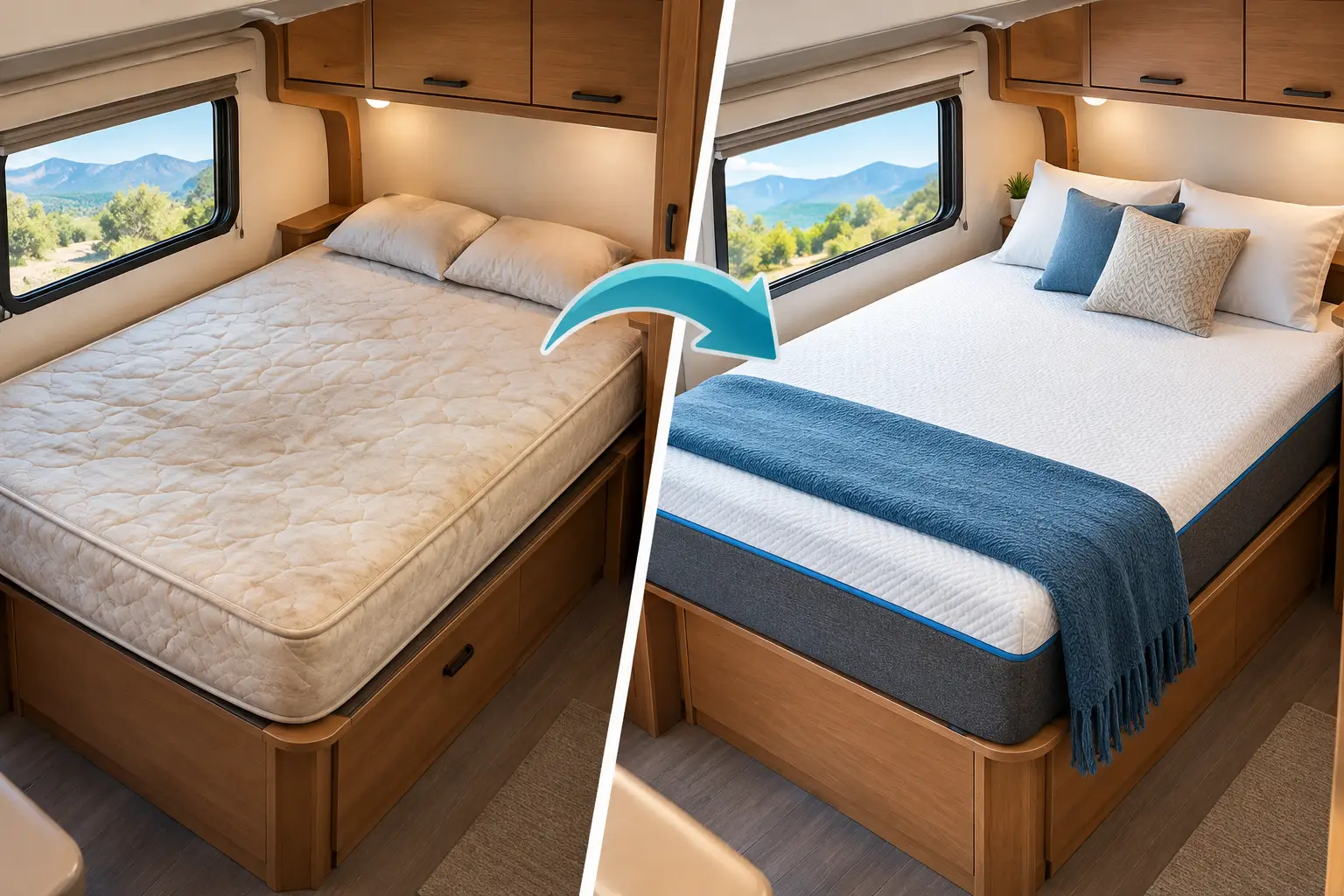
That thin, tired RV mattress can turn a great campground into a long night of tossing, turning, and waking up sore. An RV mattress upgrade before and after is not just about making the bed look better. It changes how rested you feel after a travel day, how much support your back gets, and whether your RV feels like a place you can genuinely relax.
For many RV owners, the original mattress is one of the first comfort problems they notice. Factory-installed models are often chosen to meet a price point, fit a tight space, and keep vehicle weight down. That does not always leave much room for pressure relief, edge support, or lasting comfort. Replacing it is a practical improvement that can pay off every night you are on the road.
What Changes After an RV Mattress Upgrade
The most noticeable before-and-after difference is usually support. A worn or basic RV mattress may sag under your hips and shoulders, leaving your spine out of alignment. You may wake up stiff, need to shift positions repeatedly, or feel like you slept on top of the bed rather than comfortably in it. A quality replacement mattress should distribute weight more evenly and help keep your body supported through the night.
Temperature can change, too. Dense, low-cost foam may hold heat, especially in an RV where airflow and climate control can be limited. The right mattress construction, paired with breathable sheets and a mattress protector that does not trap heat, can make the sleep space feel less stuffy. This matters on summer trips, but it also matters when two people share a compact bed.
There is a visual improvement as well. An old mattress can look uneven, stained, or undersized under the bedding. A properly fitted RV mattress creates a cleaner, more finished bed setup. Add fitted sheets that stay in place, supportive pillows, and a protector, and the room feels more organized without spending like you are furnishing a luxury hotel.
Before You Buy, Measure the RV Bed Platform
The biggest mistake in an RV mattress upgrade is assuming the bed uses a standard residential size. RV queen, short queen, three-quarter, bunk, and corner-cut mattress sizes can vary. Even two RVs labeled with the same bed size may have different platform dimensions or clearance needs.
Measure the length, width, and available height of the mattress space before ordering. Check for cabinets, slide-outs, overhead storage, curved walls, and corner cuts that affect the fit. Also measure doorways and the path from the RV entrance to the bedroom. A mattress can fit the platform perfectly and still be difficult to move inside if you do not plan ahead.
Height deserves special attention. A thicker mattress may feel more comfortable, but it can interfere with under-bed storage, block a window, or make it harder to sit up beneath overhead cabinets. For a short weekend camper, a lower-profile mattress may be the sensible choice. For a full-time RV or extended seasonal setup, additional depth and comfort may be worth giving up a little storage clearance.
Match Mattress Feel to How You Sleep
There is no single best feel for every traveler. Side sleepers often need more pressure relief around the shoulders and hips. Back sleepers usually benefit from a medium feel that supports the lower back without letting the hips sink too far. Stomach sleepers may prefer a firmer surface that keeps the midsection from dipping.
Couples should also consider motion transfer. In a smaller RV, every movement can feel more noticeable. A mattress designed to limit motion can make a real difference when one person gets up early, returns late from the campground, or changes positions during the night.
Do not buy solely by firmness labels, though. One brand’s medium can feel different from another’s. Focus on construction, support needs, mattress thickness, and the realities of your RV layout. The best value is not always the cheapest mattress upfront. It is the one that fits correctly and remains comfortable through repeated trips.
The RV Mattress Upgrade Before and After Checklist
Before the upgrade, take a close look at the problem you are trying to fix. Is the mattress sagging? Are you waking with back pain? Does the bed sleep hot? Are the sheets constantly coming loose because the dimensions are unusual? Your answer helps you spend where it counts instead of replacing one mismatch with another.
After choosing the mattress, do not stop at the mattress itself. Bedding makes a major difference in the final result. A fitted protector helps shield against spills, moisture, dust, and everyday wear. This is especially useful in an RV, where outdoor gear, pets, kids, and changing weather tend to follow everyone inside. A protector can help keep the new sleep surface cleaner and extend its usable life.
Choose sheets with enough pocket depth for the mattress you select. If your RV has a short queen or another specialty size, standard queen sheets may bunch up or pull loose at the corners. Properly fitted bedding is a small detail that makes the entire bed feel better maintained. Pillows matter, too. A new supportive mattress paired with flattened, worn-out pillows will not deliver the full improvement you expect.
Comfort Gains Without Overspending
An RV mattress upgrade should be a value decision, not an impulse purchase driven by a flashy label. Start with the dimensions and support level you need, then compare construction and total cost. Shipping, bedding compatibility, and how long the mattress is expected to last are part of the price, not extras to ignore.
You may not need the thickest model available. A well-built medium-profile mattress with dependable support can be a smarter fit for many RVs than an oversized mattress that creates clearance problems. Likewise, a mattress topper can be useful when you need a temporary comfort boost, but it will not correct deep sagging or a mattress that no longer supports your body. If the base mattress has failed, replacement is usually the better long-term value.
At 4 The Abode, practical RV sleep upgrades can be paired with mattress protectors, pillows, and bedding essentials so you can refresh the complete bed setup at a stronger overall value. Free shipping in the continental USA and a 365 Day Best Price Guarantee help make the purchase more straightforward.
Set Up the New Mattress for Better Results
Give a new mattress time to expand and air out according to its care instructions before making the bed. Make sure it sits squarely on the platform and that there are no sharp edges, exposed screws, or uneven slats underneath. If the bed platform is solid, consider whether it needs ventilation. Trapped moisture is not a friend to mattresses, particularly in humid climates or RVs stored for long periods.
Use a quality protector from the first night, then make the bed with properly sized sheets. On your first few trips, pay attention to what has improved and what still needs adjustment. Sometimes the mattress solves the support issue, while a pillow change or lighter blanket solves the remaining comfort problem.
A good RV bed should not be the part of the trip you tolerate. Measure carefully, choose support that matches your sleep style, and finish the setup with bedding that fits. The next time you pull into camp, you will have more than a place to park. You will have a bed worth looking forward to.

Leave a Reply